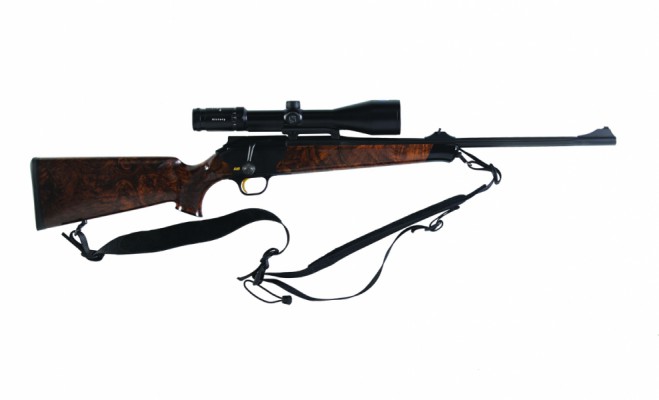
(Okay, so all this week I have been just giddy with the success of last weekend's introductory gunhandling sessions with Feral Daughters One and Two, which culminated not only in reliable hits with the Airsoft 1911 from about five yards, and also not only with exemplary attention to safety and basic handling, including load and reload...but also with conspicuous smiles. More on this effort later; for now, that's the context of my starting to think again about the broader context of airgunnery for training.)
I wanted to set down a couple more thoughts about the use of precision pellet guns for training, as the landscape has evolved a bit since I last did that. I've now been freshly reminded of the viability of using appropriate Airsoft replicas for true gunhandling, and really for any training in which the gunhandling is more important than great precision in marksmanship...but in the end, there will also remain a need for low-cost, high-volume training using something more precise.
Previously, I've written on the Scout-Rod concept, and I'm still keen on making this happen. The problem of course is that even aside from the ridiculous "safety" on the otherwise-excellent Benjamin Marauder base gun, there would still appear to be much custom work to do to get it up and running in full form, and of course along with the base gun, that's expensive. But then I noticed the Diana Stormrider, which seems more promising in several ways, especially with the ability to add an additional barrelband for the possibility of a true Scout Scope setup without extensive gunsmithing.
And then today, I happened to notice both the Diana Trail Scout, and also the Diana Mauser K98 repeater. Both of these are at the very least, interesting options!
The Trail Scout is clearly a derivative of the Stormrider, with the same bolt and breechblock, magazine, trigger and safety group, sight setup, and presumably it would accept the same second barrelband, if possibly requiring some stock inletting. The Trail Scout seems to be about half the cost of the Stormrider, runs on CO2 instead of HPA, and currently only comes in synthetic stock garb. Would CO2 be the way to go? It sure might. The Stormrider produces velocities, in .177" caliber, high enough that you can (maybe) start to lose some precision, and it seems to get about 20 good shots on a fill, with attendant blast for the not-strictly-necessary oomph. The CO2 gun advertises much more sedate velocities, and 100 shots on a fill, using three standard powerlets. Presuming the CO2 powerplant is as accurate a platform as HPA, this lower cost option might be a great training tool! (Hell, might need to have both...)
The K98 Mauser replica was also a pleasant surprise. I'd seen Tom Gaylord cover the single-shot version of this rifle before, and hadn't paid it much attention because I've already got a wonderful trainer for single shots in the Air Venturi Bronco. But this one is a repeater...and hmm, look at that bolt!
I'm pretty sure that is the closest I've seen to a full-size rifle bolt on a non-Airsoft airgun. No, it's not going to duplicate a real Mauser bolt in travel or even in feel, but it is so much closer than anything else I've seen, at least in a precision, rifled pellet gun, that it immediately becomes a serious contender for a precision trainer. It's not cheap, by comparison to other HPA alternatives like the Stormrider, and it will have some of its own flaws--for starters, a true scout scope is going to require true custom work, the "safety" is a...let's call it comically primitive crossbolt in the trigger itself (good gawd, people!), and it probably will fit the same 20-shots-per-fill, 200-bar fill pressure, 20-foot-pound envelope as the Stormrider. But hmm...that bolt, plus the onboard sights, the friendly stock (for shortening and mounting a Ching Sling), and what appears to be an overall excellent base platform...well, I now need to meet one, and am glad that the option exists!
Finally, I'm also curious to dig a little more into what SIG has been doing with EBR-pattern, semiauto rifled pellet guns. This seems a distinct "third", in terms of training importance (where "first" would imply Airsoft blowback replicas capable of precision gunhandling and gross marksmanship, and "second" would imply rifled pellet guns capable of gross gunhandling and precision marksmanship), but those lines are of course at least a little blurry. But still, to have the ability for some real rifled-pellet precision, in a semiauto*, AR(-ish) pattern carbine, would seem to be quite useful, and certainly worth the initial investment for inexpensive trigger time.
Anyway, SIG seems to have some options in their MCX and MPX rifles, and boy, I'd love to meet those too, to get an idea of what they're like. (Tom has covered both an MCX variant and an MPX variant, and I'll cogitate further on the idea.)
______________________
* In the pistol realm, I already went through this thinking a bit ago, though I don't seem to have written about it specifically yet; the core idea is to come up with a faithful replica of a "semiauto" design that can shoot rifled pellets rather than Airsoft or steel BBs--to be able to work on precision, across multiple shots. Pistols are difficult for this, at least for 1911 lovers like me: no pistol design I've yet seen seems to have been able to combine both rifled-pellet feeding, and a single-action trigger. However, what is available--and what I would argue is viable enough for the concept--are a few designs employing a small internal rotary magazine, against a "double-action" style trigger (technically, this is really a CO2-powerplant revolver, in the guise of an auto pistol), and no blowback. It's by no means perfect--I'd want the blowback and reciprocating slide if I could get it, and of course I'd want the option of a 1911 design as well--but then I stopped and considered the S&W M&P 45 variant simply on its own terms...and I think it's worth pursuing. Whether or not the 1911 might be a preferred platform, this still captures a good base gun to train on (the M&P is well-established) and the long trigger is a good exemplar of striker-fired pistols like my own beloved Kahr. I figure: use it for precision singles and doubles; the long trigger roll is the focus of the exercise here, and requires the same sort of sight-settling focus that blowback provides, without needing the actual blowback. No, it won't combine with authentic reloads or clearance drills, but it is pretty clearly the best option for precision work in a pistol that is anywhere close to ergonomically authentic to a design you'd want to train for.
Showing posts with label Training. Show all posts
Thursday, April 30, 2020
Sunday, January 31, 2016
This item may indeed be of interest.
I've never really considered the idea of a 9mm 1911 before (what, exactly, would the point of that be?), but since the arrival of Browning's magnificent little 1911-22 for small hands, my thinking has evolved a bit. And so when I got wind of Springfield Armory's new full-slide, full-grip EMP 9mm pistol, I thought it might be a good idea to get a peek to see if it might be something interesting.
Got an unexpected chance to meet one in person this weekend, and dang, it is.
The point of the EMP, originally, was to scale the 1911 down slightly, to 9mm dimensions--most importantly, in the grip length and width dimensions. I never paid much attention to it at first, because for me, it's not enough smaller than a slim-lined .45ACP model to make an appreciable difference in size, and all other things being equal I'll always take .45 over 9. And I admit I've never been a fan of super-stubby 1911s anyway, in any caliber. (I've long preferred the "Commander slide, LW Officer's frame" arrangement as the best balance between size, weight, and shootability.)
But looking at it with different eyes now, I see much to like. It absolutely is smaller in the hand, and for smaller hands that is going to make a big difference. It is all 1911 in operation, and with SA's reputation I'd expect it to run as well as anything out there. It's a 10+1 9mm of moderate weight, and may well make a splendid training or working gun for whoever's hand it fits. It's spendy (street price as I saw it was $1050), but then again it already has everything on it you'd want to put on a working gun. 9mm is cheaper to run than .45, and if you can arrange the right loads, it seems to be "enough" for defensive use, even if some of us simply like to use more. (Hell, the real reason I favor larger calibers isn't because I doubt the 9x19 at its best. It's because of the worst-case ammo supply scenario: I know that any old thing I can stuff into a .45 or even .40, that will make the gun work, will do decently well. That's never been true of the 9.)
Anyway, I'm starting to visualize a set of training guns for people that would employ the 1911 platform, but be sized for hands appropriately. At the bottom end of the scale is the Browning 1911-22 or 1911-380, at the full-sized end is the slim-lined and then the standard 1911...and dang if in the middle isn't this slightly reduced frame that just may have a solid niche to occupy.
Now, if I could just figure out how to solve the financial problems and start putting all these dang ideas to work! :-)
Got an unexpected chance to meet one in person this weekend, and dang, it is.
The point of the EMP, originally, was to scale the 1911 down slightly, to 9mm dimensions--most importantly, in the grip length and width dimensions. I never paid much attention to it at first, because for me, it's not enough smaller than a slim-lined .45ACP model to make an appreciable difference in size, and all other things being equal I'll always take .45 over 9. And I admit I've never been a fan of super-stubby 1911s anyway, in any caliber. (I've long preferred the "Commander slide, LW Officer's frame" arrangement as the best balance between size, weight, and shootability.)
But looking at it with different eyes now, I see much to like. It absolutely is smaller in the hand, and for smaller hands that is going to make a big difference. It is all 1911 in operation, and with SA's reputation I'd expect it to run as well as anything out there. It's a 10+1 9mm of moderate weight, and may well make a splendid training or working gun for whoever's hand it fits. It's spendy (street price as I saw it was $1050), but then again it already has everything on it you'd want to put on a working gun. 9mm is cheaper to run than .45, and if you can arrange the right loads, it seems to be "enough" for defensive use, even if some of us simply like to use more. (Hell, the real reason I favor larger calibers isn't because I doubt the 9x19 at its best. It's because of the worst-case ammo supply scenario: I know that any old thing I can stuff into a .45 or even .40, that will make the gun work, will do decently well. That's never been true of the 9.)
Anyway, I'm starting to visualize a set of training guns for people that would employ the 1911 platform, but be sized for hands appropriately. At the bottom end of the scale is the Browning 1911-22 or 1911-380, at the full-sized end is the slim-lined and then the standard 1911...and dang if in the middle isn't this slightly reduced frame that just may have a solid niche to occupy.
Now, if I could just figure out how to solve the financial problems and start putting all these dang ideas to work! :-)
Saturday, January 23, 2016
Interesting item? The RifleMann Sling.
Via Mas Ayoob, I now hear of the RifleMann Sling, which might prove to be interesting.
Via the Galco website, there are a few further pictures, but I'll have to hear and see more before truly concluding further. Based just on the pictures, I wonder if it may be more a takeoff of the Safari Ching Sling, than on the original design by Eric Ching. (Galco certainly seems to consider the Safari Ching Sling to be a full replacement for the original, which it is absolutely not*; I will be a little bit naturally skeptical at Galco's marketing in this regard.) And I can't tell whether the use on the shooting arm is anything more than just "hasty"-ing it around the outside, or not. It seems that this might have some utility somewhere, but it's missing a huge part of the "gun mount" without any sort of support under the rifle, and it would be hard to imagine that the lockup is anywhere near as solid.
I'm willing to be convinced, but the standard is high. Anyone else hear any scuttlebutt?
______________
* It's a simple matter of speed, and fidelity to the original idea. One of the features of the original Ching Sling is that you can get into it--solid lockup--faster than you can acquire your supported position. The Safari Ching Sling is a great idea when you're limited to two sling studs (I use mine whenever borrowing a rifle that doesn't have three studs), and certainly gives great lockup, but there is no way it can ever be as fast and forgiving as the original. If you simply want a solid sling on a two-stud rifle, the Safari Ching is probably the best thing going. But if you want the full, original idea--the ideal sling for solid lockup at maximum speed--you want the original.
Via the Galco website, there are a few further pictures, but I'll have to hear and see more before truly concluding further. Based just on the pictures, I wonder if it may be more a takeoff of the Safari Ching Sling, than on the original design by Eric Ching. (Galco certainly seems to consider the Safari Ching Sling to be a full replacement for the original, which it is absolutely not*; I will be a little bit naturally skeptical at Galco's marketing in this regard.) And I can't tell whether the use on the shooting arm is anything more than just "hasty"-ing it around the outside, or not. It seems that this might have some utility somewhere, but it's missing a huge part of the "gun mount" without any sort of support under the rifle, and it would be hard to imagine that the lockup is anywhere near as solid.
I'm willing to be convinced, but the standard is high. Anyone else hear any scuttlebutt?
______________
* It's a simple matter of speed, and fidelity to the original idea. One of the features of the original Ching Sling is that you can get into it--solid lockup--faster than you can acquire your supported position. The Safari Ching Sling is a great idea when you're limited to two sling studs (I use mine whenever borrowing a rifle that doesn't have three studs), and certainly gives great lockup, but there is no way it can ever be as fast and forgiving as the original. If you simply want a solid sling on a two-stud rifle, the Safari Ching is probably the best thing going. But if you want the full, original idea--the ideal sling for solid lockup at maximum speed--you want the original.
Friday, November 13, 2015
Another fun shop installment.
Worked a fun shop visit in to our business today, and wanted to document a few observations.
Mossberg MVP boltgun
This one wasn't the "scout" model that I still hope to meet some day, but it was the same turnbolt action on which the "scout" model is based, and I'm happy to have learned what I did. As expected, extraction is (very small) sliding-plate and ejection is boltface plunger, so boo, but other than that, it was actually pretty nice. Loading/ejection port access is actually not as restrictive as I would have guessed, even with the Weaver rail straddling the receiver rings. Bolt operated smoothly, with a convenient bolt stop and friendly cocking effort. The safety was ergonomic and pleasantly positive; I'd prefer that it lock the bolt as well as prevent discharge, but that seems a minor point. I'm not a fan of "open" rear sights on rifles, but this one was well-done, and hey, kudos that the rifle has them at all, in an age that seems to automatically presume conventionally mounted moonscopes.
I'm happy to say that the trigger is no joke. No, it's not a Savage Accu-Trigger, much less a Mannlicher Scout or Blaser R93 trigger, but it's good enough that you'll not need to improve it. Presuming the rifle runs reliably and durably, it seems like a reasonable platform, and I look forward to seeing the "scout" trim, both the glassed and glassless models.
Mossberg 464 levergun
Now having met this piece in person, it seems to be just exactly what I figured it might be, and I think I may need to add one to my stable some day. It feels just a hair long with the fancy flash hider, but it balances like a '94 levergun, which is always a win. I'm happy to say that the fore-end is slimmer than I was fearing, and the rail segments seem to be integral with the fore-end composite. Presumably they can be either replaced with a separate fore-end, or simply cut off, if like me you prefer keeping things as compact as possible. (I might keep the bottom one for a sling attachment point, although it does seem rather grandiose for that simple purpose....)
The tang safety works, and is a welcome addition to a levergun which is to serve "serious social purposes" as well as traditional hunting ones. (I could tolerate Condition Zero in an urban levergun if necessary, but would prefer Condition One if I could get it. The tang safety makes that possible.) The sights are excellent, but again as on the bolt, why bother with an "open" rear sight when the 464's receiver has a beautifully placed rearward ring in just the right place for a compact ghost-ring aperture? I simply do not understand why anyone would prefer open sights to an aperture: the latter is superior in every way that matters. (And then, of course, the top of the fore-end could get its own rail space for forward mounting of "scout" glass or dot sights.)
The buttstock is exactly what it should be, and the quick adjustments are very nice to have. An excellent feature for working with noobs, especially the smaller-statured. Action seems smooth enough, and presuming it runs--it's a '94, and should work well.
The trigger...is rough. Nearly painful, actually. Consider all the bad press you've heard about levergun triggers before; that's because of triggers like this one. Okay, so it needs work. Theoretically, with a '94 action, gunsmiths should know how to do that--and the effort would be worth it. With a crisp trigger in the 3-4 pound range, this seems a seriously useful rifle. As a 6+1 in .30/30, it really is a full-blown rifle, limited mostly by the range limitations of iron sights, not horsepower. I still think it would also be worth offering as an intentional carbine, chambered in .45 Colt, .44 Magnum, or even .357 Magnum, with a 9- or 10-round capacity. Again, within the limitations of iron sights, these revolver rounds have surprising reach, and more thump than I'd have guessed. And if we ever sort out The Great And Pointless Rimfire Shortage, there is the idea of this levergun as a 14-round .22...
Browning 1911-22 pistol
Wanted to check this fit in the 6yo's hand today. Glad I did. She can get a good grip, with thumb on safety and no H-gripping, and the pad of her trigger finger is within a quarter-inch of right on. Essentially, she's ready, ergonomically. She's also strong enough to rack the slide, properly. Squee!
Great. Now I just need to get the whole "earn a living" problem sorted out, and find some .22 ammo, and add this lovely little piece to the stable.
Ruger LCP pistol
6yo very sweetly requested to see an LCP accoutered in pink camo, and an LC9 in solid purple. Very well then! She learned a little about ergonomics when she tried to rack the wee slide on the LCP, against the DAO hammer, but this gun fit her hand nicely if she consciously took a high grip.
The LCP seems okay. .380 doesn't thrill me, but with the right ammo and the right attitude, I'd sure use one over throwing rocks. It doesn't seem that much smaller, to me, than the Diamondback DB9, which I still see here and there, and I'd take the DB9 in a heartbeat for the pocket gun role.
Ruger LC9 pistol
I was a little less impressed with the LC9. In 6yo's hand, trigger reach was much too far, and sizewise, the piece seems right in there with the Kimber Solo, DB9, Kahr, G43, etc., designs, all of which have better ergonomics. Well, now I know! :-)
Kimber Solo pistol
Dang if I don't continue to like this little pistol, even though I've heard some unflattering things about it here and there--that I haven't fully vetted one way or the other. Trigger, at least on this sample, was really excellent, with a somewhat long but positive reset, and despite the diminutive size, controls and ergonomics are very nice. Sights are excellent. The manual safety design in particular seems outstanding, and perfectly intuitive to 1911 aficionados. It seems to be right on the cusp between true "pocket pistol" (such as DB9, DB380, LCP, etc.) and "subcompact" (such as Kahrs, G43, S&W Shield, etc.) and with a lightweight frame, would become my instant first choice in a 9mm pistol. (It's not exactly heavy, even with a steel frame, but its weight does exclude it from the sub-one-pound class. Suffice it to say that if I were to choose a 9mm based on weight and size alone, it would be the DB9, and if I were to choose the best shooting subcompact--suitably small but still requiring a holster for support--I'd probably go to the Solo.)
Kimber Micro 380 pistol
This was unexpected. Got to see Kimber's mini-1911 in .380 ACP; more than anything it seems to be exactly the sort of update to the Colt Mustang that I always hoped for before the Browning 1911-22 and 1911-380 came along. It's small. It's 1911ish, but with pivoting trigger, slightly different safety lever, and the full-on Kimber treatment. Looks promising in many ways, but again, .380 does not thrill me, and there is now the 1911-380, which may be the superior choice for most uses.
Will keep an eye out, and look again as .380 options become more immediate for up-and-coming kids. :-)
S&W Shield pistol
The "what mood will Shield be in today?" effect continues. I continue to like the general ergonomics, and the price point is actually pretty compelling too. But today, this one's trigger had horrible backlash and a mushy, very un-positive reset. Hm.
Still, I like the piece in general. The safety still works every time, despite its diminutive appearance. Grip comfort is conspicuous. It has a reputation for running without fuss.
S&W M&P pistol
I wanted to renew my acquaintance with a standard M&P pistol frame, mostly because I am intending to go this route with airguns. (A separate topic for another post; suffice it to say that I needed a core design among the polymer-framed, striker-fired, doublestack guns to go with, and the S&W is getting the nod based on several factors, including ubiquity of models across the spectrum of pellet guns, BB guns, and Airsoft guns of multiple powerplants.)
After a few minutes in the hands, I think it's the right choice. The M&P frame is pretty comfortable, for a double-stack, and otherwise ergonomics are plenty good enough. Trigger on this one was surprisingly good; perhaps a bit heavier than ideal, but with a very nice, positive reset, and without the noticeable backlash problem of the Shield.
I'll be posting more about M&Ps as the airgunnery experiment unfolds. Given that I don't like doublestack designs as a rule--on simple account that they feel like two-by-fours in the hand--M&P is definitely one of the friendlier ones.
Springfield Armory XD-S pistol
Picked up one of these again, just to compare it on the same day with Shield. Glad I did, too: it confirmed that I really like this pistol. Ergonomics suggest a much bigger gun, but XD-S is slim and compact. This one's trigger was crisp (for a striker gun), reasonably light, and with a notably positive, short reset. I still think that the XD-S "4.0" is the logical heir to the Colt Lightweight Commander, for the working man's general purpose pistol. Now having seen probably a dozen examples each of XD-S and Shield, I think I'd always opt for XD-S first, for my own purposes.
Colt Commander CO2 BB pistol
Saw this in blister pack on the way out of the gun section. I hadn't come to look at airguns today, but it caught my eye, and I'm considering this piece as a possible training/education tool anyway. It's a reasonably faithful 1911 reproduction, powered by a CO2 12-gram cartridge contained in the detachable magazine (which also houses the BBs), and is developing a decent reputation for accuracy ("accuracy" being something you have to adjust your thinking to, with smoothbore round-ball shooters like 'BB guns' and Airsoft guns). The gun does "blowback" on firing, which is good in a trainer to disrupt your sight picture, and in general the manual of arms is nearly straight 1911 firearm. It's really only missing a ducktail grip safety among the most common updates, and with the minimal blowback of a CO2 BB pistol, I suspect it won't be the problem it is with a .45 ACP anyway.
So there it was, and I took a second to look at it. It is indeed "full metal", as weighty as a steel 1911, with good sights, functional safety, and in general looks well-built. I look forward to trying one out, especially with some of the new low-ricochet plated BBs that have become available.
Until next time, then. Much cogitation to do. :-)
Wednesday, November 11, 2015
derp
I know I've said this before--please forgive the vent--but I just can't get over the sheer amount of derp in the manual safety design of the Benjamin Marauder*. I keep thinking about the idea of building a "school set" of air rifles for students to learn on and train with, and the basic Marauder design (reliable boltie 10rd repeater, internally suppressed, adjustable power, hand-pump friendly PCP reservoir, topflight trigger, conspicuously accurate barrel) keeps coming up as being almost the obvious platform choice.
But seriously...just look at this:
Yes, you can click to make it bigger, but why would you?
So...what you're saying is that in order to on-safe my loaded piece, I stick my finger inside the trigger guard and pull the lever to the rear.
derp derp derp
Look, I know I'm a pain in the ass about gun safety, and about gun safeties, and ergonomics in general...but at least there is a consistency to my own neuroses, and I'd like to think that a design like the above would have been laughed into oblivion before ever even coming up for serious approval, on the simple account of maybe, just maybe, the ergonomic action to make the loud noise and the ergonomic action to prevent the loud noise SHOULD NOT BE THE SAME. But this damned thing actually made it out of committee and through legal!
The Garand safety is bad enough, but at least there you can say that the on-safe motion is outside the trigger guard. This...I just don't know if I could ever see using it as a training tool--unless I just ignored the safety lever entirely as a...well, a safer option. I still think that it wouldn't take too much effort to build a dogleg connector to a more ergonomic lever or button, and then the M-Rod would be nearly authentically there as a platform, lacking only iron sights, a short LOP, and if optics are important, a means of mounting an IER glass forward over the shroud.
Until then...well, I keep wondering how to turn a Benjamin Discovery into a repeater with sound suppression, or if it's possible to drop a Marauder pistol (which uses a simple trigger-blocking cross bolt safety...crude, but at least not idiotic) into a rifle stock.
Grrr. So close on the whole...and yet for training, so completely unusable.
___________________
* Not to pick on the M-Rod specifically; the basic trigger group/safety design was around well before the Marauder was launched, and lots of airguns, especially spring-piston breakbarrels, use some variation of the damned thing. (I suspect it is probably a very economical way to get a complete trigger/safety group into a stock with minimal cutting.) I harp on the Marauder because it is such an otherwise outstanding piece of kit, that the derp hurts that much more.
Wednesday, October 14, 2015
Fun shop research.
Got a few minutes today to stop in at a local fun shop; a few items seemed worth recording here.
Yeah, that bolt throw is really short. I was hoping it wouldn't feel that much so, but it does. That's just not going to be an honorable trainer for a real turnbolt centerfire. I suspect there's still a lot of value in the "Scout airgun" concept, but I may want/need to modify my thinking a bit on it. Boltwork is important. (Maybe when--if--my financial ship comes in and I can fully go at a new custom project, I'll try to convince someone like Tom Gaylord, or a Dennis Quackenbush, or some other innovator in the airgun space, to work with me on a concept piece. I still think that some sort of slow-indexing cam is a worthwhile pursuit, to get a faithful bolt function.)
Conceivably the not-fully-optimized airgun could be thought of more as an adjunct piece to a carefully plan, that includes both live- and dry-fire of the centerfire Scout, live-fire airgun focused on singles, and/or live-fire rimfire. After all, so much useful work can be done dry, with a manual repeater, and of course that would be the very bolt to practice on... okay, set cogitate mode on.
I do still want me a P-Rod, though. The carbine length is nice, and with the right sighting arrangement it should be a nice workhorse. Downside: the dang stock is too long, and doesn't lend itself well to shortening; there is an AR stock adapter available but believe it or not the shortest LOP is still too long. (I suspect there's a good answer available, but haven't found it yet.)
Yeah, okay, I really am on to something here: the Disco is impressive. It looks heavier and bigger than it really is, and should prove most useful for working with the small-statured. Stock is workable wood, which means shortening LOP and adding Ching sling studs will be simple. It shoulders naturally, and in this age of insistence on carbine-style vertical pistol grips it actually feels like an honest-to-goodness rifle. Safety is indeed acceptably located--would be better at front of trigger guard rather than rear, but it will do. Rear sight seems plenty good for an open sight, but of course I'll discard that and put a ghost-ring on instead, and probably replace the front with a solid square post.
The bolt seems solid enough. but the action is not "positive". As a reliable teaching rifle, it is probably perfect. I'd love to see positive clicks and snaps, but that is really just preference talking.
I like the Disco more and more the more I learn about it. It may not have the repeating mechanism or the sound-suppression of the Marauder, but its safety is vastly superior to its upscale brother, and it is both lighter and shorter besides. It's quite possible that the route I will take may not to go to the Marauder at all, but rather to have a custom Disco with sound suppression. Will think further.
It is indeed luxuriously short. (Muzzle blast must be impressive to the shooter.) Short enough that I admit I have, somewhat surprisingly, a visceral hesitation to it. Sure, it's probably irrational, but I can't deny that it's there. Sight radius will necessarily be limited. The forward sling stud would necessarily be right there at the muzzle. And I believe the horror stories about shot hands after shearing off vertical foregrips during chambering. (I'm not a vertical-foregrip kinda guy in the first place, but still. This is a pump shotgun, after all; one works the action briskly, and the idea that your hand winds up right out there at the end of the stroke is somewhat sobering. One might reasonably observe that the pistol is even shorter, but the pistol's chambering stroke is away from the muzzle, not toward it.)
And yet there is much to like about the piece. It is, if nothing else, ingenious. Controls seem reasonably sized, positive, and easy to reach. 14 rounds of 12-gauge in a package this compact is impressive to my "size efficiency" aesthetic. It doesn't feel nearly as heavy as it really is.
So, jury's still out. But I'm glad it's here.
Anyway, the G43 does indeed dispense with the "feels like a two-by-four" problem, and that makes me happy. It's not the thinnest of the breed, and it won't displace my interest in Kahr, Shield, XD-S, and Solo, but it is certainly of the breed, and that will probably make it the Glock I'll go to when I want to get serious about Glock-fu. The rest of the gun was...Glock. Which means it seems well-built, simple, logical, and probably runs like a top.
He insisted I look at a PX4 Beretta for how "comfortable" and "safe" it was; I said upfront I could guarantee I wouldn't like it, and that my safety was between my ears. Fat in the hand, DA/SA fire control, decocking slide mounted safety, and size inefficient. I'm sure it runs fine, and some might like it, but after hearing me working over the G43 and discussing what it was about that piece which interested me, one would think he could manage a little less tone-deafness than this.
Perhaps I should have made it a point to make a point, but honestly it's frustrating that one should have to do that, and given the reasonably clear signals he ignored in the first place, I'm not sure it would have made much difference anyway.
The fun shop...should be, damn it. But sometimes, research can be painful.
Benjamin P-Rod airgun.
I had remembered that this place had carried a P-Rod before; since this "pistol" uses the same bolt mechanism as the M-Rod rifle I've been considering for the Scout-Rod concept, I thought I'd put it to shoulder with that in mind.Yeah, that bolt throw is really short. I was hoping it wouldn't feel that much so, but it does. That's just not going to be an honorable trainer for a real turnbolt centerfire. I suspect there's still a lot of value in the "Scout airgun" concept, but I may want/need to modify my thinking a bit on it. Boltwork is important. (Maybe when--if--my financial ship comes in and I can fully go at a new custom project, I'll try to convince someone like Tom Gaylord, or a Dennis Quackenbush, or some other innovator in the airgun space, to work with me on a concept piece. I still think that some sort of slow-indexing cam is a worthwhile pursuit, to get a faithful bolt function.)
Conceivably the not-fully-optimized airgun could be thought of more as an adjunct piece to a carefully plan, that includes both live- and dry-fire of the centerfire Scout, live-fire airgun focused on singles, and/or live-fire rimfire. After all, so much useful work can be done dry, with a manual repeater, and of course that would be the very bolt to practice on... okay, set cogitate mode on.
I do still want me a P-Rod, though. The carbine length is nice, and with the right sighting arrangement it should be a nice workhorse. Downside: the dang stock is too long, and doesn't lend itself well to shortening; there is an AR stock adapter available but believe it or not the shortest LOP is still too long. (I suspect there's a good answer available, but haven't found it yet.)
Benjamin Discovery airgun.
This air rifle is what I think I'd go to, if asked to put together a "classroom set" of noob training guns. Since they had one, I thought I'd look at it in that context.Yeah, okay, I really am on to something here: the Disco is impressive. It looks heavier and bigger than it really is, and should prove most useful for working with the small-statured. Stock is workable wood, which means shortening LOP and adding Ching sling studs will be simple. It shoulders naturally, and in this age of insistence on carbine-style vertical pistol grips it actually feels like an honest-to-goodness rifle. Safety is indeed acceptably located--would be better at front of trigger guard rather than rear, but it will do. Rear sight seems plenty good for an open sight, but of course I'll discard that and put a ghost-ring on instead, and probably replace the front with a solid square post.
The bolt seems solid enough. but the action is not "positive". As a reliable teaching rifle, it is probably perfect. I'd love to see positive clicks and snaps, but that is really just preference talking.
I like the Disco more and more the more I learn about it. It may not have the repeating mechanism or the sound-suppression of the Marauder, but its safety is vastly superior to its upscale brother, and it is both lighter and shorter besides. It's quite possible that the route I will take may not to go to the Marauder at all, but rather to have a custom Disco with sound suppression. Will think further.
Kel-Tec KSG shotgun.
Ah, the storied and famed KSG. And now I've met one in person.It is indeed luxuriously short. (Muzzle blast must be impressive to the shooter.) Short enough that I admit I have, somewhat surprisingly, a visceral hesitation to it. Sure, it's probably irrational, but I can't deny that it's there. Sight radius will necessarily be limited. The forward sling stud would necessarily be right there at the muzzle. And I believe the horror stories about shot hands after shearing off vertical foregrips during chambering. (I'm not a vertical-foregrip kinda guy in the first place, but still. This is a pump shotgun, after all; one works the action briskly, and the idea that your hand winds up right out there at the end of the stroke is somewhat sobering. One might reasonably observe that the pistol is even shorter, but the pistol's chambering stroke is away from the muzzle, not toward it.)
And yet there is much to like about the piece. It is, if nothing else, ingenious. Controls seem reasonably sized, positive, and easy to reach. 14 rounds of 12-gauge in a package this compact is impressive to my "size efficiency" aesthetic. It doesn't feel nearly as heavy as it really is.
So, jury's still out. But I'm glad it's here.
Glock G43 9mm.
I happened to notice one of the new Glock G43 single-stack 9mm pistols in the rack, and of course had to see that. No, I've never been a Glock guy, but really, that has been mostly because of two very specific personal reasons: 1) they just feel like two-by-fours in my hand, and 2) the trigger has always caused my trigger finger to nearly go completely to sleep over the course of 20 shots or so. (I first noticed that on my ex-wife's G23 a lot of years ago, and every Glock I've shot since then does the same thing. I really wanted to like that G23, but I kinda need to retain sensitivity in my trigger finger, ya know?)Anyway, the G43 does indeed dispense with the "feels like a two-by-four" problem, and that makes me happy. It's not the thinnest of the breed, and it won't displace my interest in Kahr, Shield, XD-S, and Solo, but it is certainly of the breed, and that will probably make it the Glock I'll go to when I want to get serious about Glock-fu. The rest of the gun was...Glock. Which means it seems well-built, simple, logical, and probably runs like a top.
Counter-jockeys.
Le sigh. I think I've run into this particular counter-jockey before; he'll make you work to avoid having to tell him how full of shit he is about...oh hell, a lot. His ignorance about airguns is nearly weapons-quality, and he shows no sign of being really interested in learning otherwise. His gunhandling was awful, as was his attention; he didn't even seem to notice me repositioning myself nearly constantly whenever he was handling something.He insisted I look at a PX4 Beretta for how "comfortable" and "safe" it was; I said upfront I could guarantee I wouldn't like it, and that my safety was between my ears. Fat in the hand, DA/SA fire control, decocking slide mounted safety, and size inefficient. I'm sure it runs fine, and some might like it, but after hearing me working over the G43 and discussing what it was about that piece which interested me, one would think he could manage a little less tone-deafness than this.
Perhaps I should have made it a point to make a point, but honestly it's frustrating that one should have to do that, and given the reasonably clear signals he ignored in the first place, I'm not sure it would have made much difference anyway.
The fun shop...should be, damn it. But sometimes, research can be painful.
Tuesday, October 6, 2015
A metaphysical lament. When those who say they get it, don't.
As I was writing this, I had already been thinking about making it into a post of its own, because the topic seemed to be worth it. The following was inspired by one of Mama's insightful comments, and once Blogger told me it was too long to be a comment, it was reasonably easy to say, "okay, Blogger, fine...I'll make it into its own post."
As a "contextual continuity clue": the following relates to several posts I've got here at Rifleman Savant, in which something relating to a Jeff Cooper topic--scout rifles, Ching slings, gunhandling technique, etc.--struck me as so far off the mark of what Cooper actually said or intended, that I felt the need to vent about it. Mama's comment got me thinking about that, and I responded as follows:
Maybe it's just a normal phenomenon that accompanies middle age, but I am really starting to grasp the wistful frustration that I so often read as a younger man (without really understanding) in Jeff Cooper's work. Or, maybe it is a natural outgrowth of a long-cultivated appreciation of deliberate design. (And really, I suspect strongly those two things are quite related.) But whatever the reason, it seems like the "...how often they do very badly at it" observation comes frequently in recent years.
I'm certainly not without my own history of jumping in to something before fully understanding it, but I like to think that I am learning that it always--always, without exception--fails to achieve full value, or at least full synergistic value. Probably these days I go too far the other way, where the biggest risk is in missing the window of time for which the whole idea has currency.
With something like this [a "scout rifle" missing critical features or implementing others badly], or like my recent lament about misunderstanding the technique of the speed sling, I wonder if the bigger problem is less the people whose well-intentioned exuberance carries them into a place they do not understand, and more the problem of chest-thumpery among those who purport to know, but don't. How do the consciously ignorant know that they are not following the unconsciously or willfully ignorant?
The position I'm in myself is a real challenge, in this regard. Anent the observations and teachings of Jeff Cooper, I tend to minimize how much I actually know, since 1) it's kinda my personality in general (I like being underestimated), and 2) I don't have a CV of "official" credentials that say I know what I know. But know it I do, both because I have long paid really close attention to matters of design and the history of design, and because I have tested nearly all of it myself and understand why it works from that perspective. And so when something misses the mark, it jumps out at me like nails on chalkboard, and I can both quote chapter and verse, and then defend it extemporaneously.
But who am I, really, to speak with authority on it in the first place? I only met Col. Cooper, in person, once. I have never "been in a gunfight" (and am quite happy about that, no joke). I'm no sort of master marksman, nor particularly fast. I've never got into formal competition, and I get quite a bit less trigger time than it would require to impress a good number of people. And so I try, at least, to minimize my own authority, because I can't really argue that I have it. Shooting, for good or ill, seems to carry an expectation that "experience" equals "analysis".
On the flip side, I am reminded of how much I really do know, and at what level of explication and depth, pretty much every time I engage with someone else, even those with years of shooting experience. I couldn't even tell you the number of people I've met who know simply astonishing minutiae about how to wrest a tenth of an inch of group size from their precision fitted boltgun, at exactly 100 yards, from a bench--who have no idea how to use their own body, much less a shooting sling, to shoot from an unsupported field position with any stability; or how to zero their rifle to optimize a "maximum point-blank range" for what they will be most likely to encounter in the field; or how to manage their ammunition supply without looking at it; or even how to run the bolt from the shoulder... It's a little better for pistolcraft, but not a lot. There's been a depressing resurgence in the concept of unsighted pistol fire, usually declaring loudly a complete non-understanding of the flash sight picture. The "high-speed, low-drag" tactards have convinced far too many that "two to the chest, one to the head" is nothing but a speed drill, rather than the observation-and-problem-solving technique that it is. The "cold range" mentality, as understandable as it can seem, continues to retard any general improvement in safe field gunhandling. And so on.
It's hard to say simply that people need to be more observant, although that seems like an obvious part of the solution. "Try it yourself, before you believe or disbelieve" would seem to be another obvious one, as would "go to the source, after you hear it second-hand". But a really substantial part of the problem is also those who stand up and loudly say "Lookit me, I know!", and then don't. When it comes to things that Cooper taught (both the gold and the stuff that really does need re-thinking), I usually know, immediately, when someone is wrong. But does that make me right? I struggle with that, but I also don't want to see such an immense reservoir of knowledge and history simply forgotten, or worse, revisioned by people who didn't really understand it in the first place.
Sorry. Metaphysical lament.
Labels:
Education,
Irony,
Jeff Cooper,
Pistols,
Rifles,
Rob Pincus,
Safety,
Scout,
Slings,
Training
Thursday, October 1, 2015
Apparently Mossberg has been busy.
I haven't paid hardly any attention to Mossberg in...a long time. By complete accident today, I encountered a couple of items that seem quite interesting.
Scout Rifle
I never realized they had an entry in the "scout rifle" space, but lookee here:
Oh, I can immediately see problems. It doesn't make weight. The glass on the "with-glass" model seems to offer most of the problems of a conventional eye relief without delivering the value of a true intermediate eye relief. The rail with integrated ghost-ring sight is indeed nice, but it ruins access to the loading/ejection port without offering anything of real value. The bolt design appears to be push-feed, plunger-eject, and sliding-plate-extract--exactly what the Scout Conferences codified as the configuration of last choice*. The LOP is too long, with no apparent means of adjustment. And there is no stud for a Ching Sling.
But at least someone is trying, and there are a couple of nice features here. The ability to use both AR10 and M14 magazines? Yeah, that seems like a goodness thing--provided it turns out to be suitably rugged and reliable. The trigger may be nice as well, but I've got no sense of field feedback on it yet.
All in all, from the look of it, this might yet be a decent platform for the concept. It should be reasonably trivial to shorten the LOP and round the buttpad, cut out the rail space obstructing the objection port (or replace with a more suitable alternative), and add a middle stud for a Ching Sling. Acquire a Leupold M8 2.5x Scout Scope and mount it as low as possible with QD rings, add the Ching Sling itself, and include some magazines, and--again, provided it runs--this might be a very nice little rifle. It would have the magazine advantage over the Ruger, but require a bit more fiddling to get it close enough to spec to get the complete system synergy--and the Ruger's bolt is closer to the Scout Conference spec. Hey, if nothing else, choice is good, and I'm happy to see it!
Lever Gun
I also--and again, accidentally--ran across this levergun, offered both as a 6-shot .30/30 and a 14-shot rimfire:
This struck me as a cross between "very encouraging" and "total facepalm". On the "encouraging" side, I love the adjustable LOP idea, and a tang safety on a levergun is the right way to include what is arguably a not-strictly-necessary feature in the first place. The front sight base seems reasonably sturdy, and the rear receiver ring should both permit a compact ghost-ring sight, and clear access to the ejection port. Very nice. I've got no idea how it runs or how the trigger is, but presumably any kinks could be worked out with some comparatively light gunsmithing.
Then I noticed the fore-end rail space.
Seriously, Mossberg? You put rails on all sides except the top? Okay, look, I admit I don't really speak tactard in the first place, but I think most of us would look for a top rail first, and then maybe--maybe--a bottom. One of the principal attractions of the levergun in the first place is its luxurious flatness, and side rails would seem to be inherently counterproductive to that end.
Look, it's a levergun, not a plumbing main. The more stuff you hang off those rails, the further away you get from what attracted you to the design in the first place.
Despite that irritation, though--a single rail on top would have permitted scout scope or dot sight options and still allowed a svelte fore-end--I like the idea of this piece, and hope I get to meet one some day. May it sell well enough that Mossberg offers it in other calibers too--I'd love to see .45 Colt or .44 Mag, and even .357 is a worthy option for an iron-sight carbine.
Youth Boltgun
Finally, Mossberg also seems to offer a youth-scaled rimfire boltgun:
I'll have to look into this one some more, but I like the concept of the single-shot adapter/plug, plus the ability to take 10-round magazines as well. Gives the kid something to grow into. I've no idea about trigger or accuracy, but the safety seems well-located, the receiver sports a dovetail that should permit a good ghost-ring rear sight, it's light enough and looks amenable to some light gunsmithing should that prove necessary. The fore-end looks a little short for a proper shooting sling, but I'd have to see it in a kid's hands to know if it was too short. The LOP is just about right for adults (12.25") but should be shorter for kids; since it's wood, this should not prove to be a daunting problem.
Again, I'd love to meet one and see how it feels in the hands.
So, cool! Mossberg has been busy. Will have to cogitate, investigate, and see what if anything comes of it. :-)
_____________________
* Once again, full disclosure is that even the Steyr Scout is not controlled-feed, nor inertial-eject. The Scout Conferences were clear enough in their preference for controlled-feed, inertial-eject, full-claw-extract...but Cooper must not have thought it a deal-breaker for the production Scout, as I'm not sure he ever even mentioned the Steyr SBS's use of plunger-eject and Sako-style mini-claw extractor. The Steyr also has restricted access to its ejection port, and (just barely) doesn't "make weight" either. Clearly, this arrangement can run just fine despite being "out-of-spec", and I always try to apply a few grains of salt when evaluating another take on the concept. :-)
Monday, August 3, 2015
The unexpected hazards of an air rifle match.
Had a delightful afternoon providing a bit of assistance at a small 4-H air rifle match about 80 miles up the road. It was held at a gun club that I may have to look into further, as they do have bona fide facilities to run rifles at a distance (meaning: 300m plus), which is oddly missing around here. For this event, we were in a pistol bay, with a tow-strap-in-the-sand firing line and a rather clever clothesline-style target apparatus at the 10-meter line. Add in an unusually sunny, brilliant day, and things were looking good.
A lot went wrong.
The poor fella running the match (who I know to be both perfectly competent and a genuinely nice guy) just couldn't catch a break. One by one the rifles (Daisy Avanti 888 Medalists, powered by removable 2.5g CO2 cylinders), ran out of gas, and of course the refill tank was with someone else. It got down to one working rifle, and thus one shooter working at a time, before the ability to recharge arrived--and even then it was not a slam-dunk. "Recharged" cylinders...weren't. Some didn't seat correctly. A couple of new shooters repeatedly dipped muzzles into the (very fine) sand on the prone mats. The same sand found its way into bolts, making it a challenge for some of the kids without well-developed hand strength. Once new cylinders started making it properly seated into rifles, sights needed to be adjusted for the fresh fill of gas (normally this wouldn't be much a problem as the CO2 is largely self-regulating, but there is a difference between a cylinder at exhaustion and a completely-topped-off one). And of course what to do with a shooter who was interrupted by a failing rifle in the middle of her string? Some of the kids are good enough shots that it doesn't seem fair to handicap them with erratic equipment.
Oddly enough, I had recently been thinking about what I'd do myself, with what I've learned about airgunnery, if I were asked to build a "school set" of rifles to handle a wide variety of conditions. The 888 Medalist certainly seems a nice rifle, but the dependency on specialized fill equipment seems to make this sort of problem inevitable at some point. Personally, I find the 888's trigger spongy, the bolt a little awkward and stiff, and the loading tray a challenge for the tiny .177 pellets. And I admit, I just do not care for target aperture sights--I can't stand not being able to see around what I'm shooting at--but this is probably just part of the game and not something I'd have much influence over.
What I'd do is go with the Benjamin Discovery, instead. For about the same money as the 888, you get the "Disco" rifle and a hand pump to feed it! I'd spend a little more, though, and find a simple receiver sight to replace the open rear that comes on the gun, and replace the fiber optic front with a plain square post. With this slight upgrade, I think we have an outstanding training and match rifle which can be entirely self-supported. The Disco is renowned for being durable, accurate, and easy to work with. The fill pressure is much lower than most PCPs, and so almost anyone can operate the hand pump. It can still be filled from a tank, of course, if need be, but I rather like the idea of having each shooter fill her own rifle prior to stepping up to the line--knowing exactly how much air is in the gun on account of having just put it there.
Especially with a ghost-ring aperture in the rear, the Disco is a much more suitable rifle to learn and train on, than a specialized 10m competition gun. I think we do people a disservice to start them on a sight system so specialized that it deliberately obstructs everything around what you are supposed to shoot at (honestly, how can you even observe Rule 4 when all you can see is the bull?), and then wire it so specifically to that precise little bullseye that it's essentially useless for anything else. Sure, maybe I'm a slave to practicality, but I also know that I am very little, if any, better with target sights than I am with general-purpose sights, and the latter is far superior to the former in every realm other than formal competition.
And besides, I remind myself, I am not looking at the 10m competition as the end point, but the starting one. Once you can get shots in the bull at 10m, it is time to start a) going faster (acquiring position), b) going farther (effectiveness of position), or c) both. This is what will develop you beyond basic mechanics, and which will set you up to appreciate the use of efficient sights, shooting slings, and good ergonomics, along with understanding why the technique is what it is.
Which then segues into the Scout-Rod* concept all over again. See? There's at least a convergent consistency to my geekery. :-)
______________________
* And the Scout-Rod, at least at this writing, is modeled on the Disco's refined descendant, the Marauder, which takes many of the Disco's nice features and adds to them (e.g., a bolt-action repeating mechanism, internal sound suppression).
A lot went wrong.
The poor fella running the match (who I know to be both perfectly competent and a genuinely nice guy) just couldn't catch a break. One by one the rifles (Daisy Avanti 888 Medalists, powered by removable 2.5g CO2 cylinders), ran out of gas, and of course the refill tank was with someone else. It got down to one working rifle, and thus one shooter working at a time, before the ability to recharge arrived--and even then it was not a slam-dunk. "Recharged" cylinders...weren't. Some didn't seat correctly. A couple of new shooters repeatedly dipped muzzles into the (very fine) sand on the prone mats. The same sand found its way into bolts, making it a challenge for some of the kids without well-developed hand strength. Once new cylinders started making it properly seated into rifles, sights needed to be adjusted for the fresh fill of gas (normally this wouldn't be much a problem as the CO2 is largely self-regulating, but there is a difference between a cylinder at exhaustion and a completely-topped-off one). And of course what to do with a shooter who was interrupted by a failing rifle in the middle of her string? Some of the kids are good enough shots that it doesn't seem fair to handicap them with erratic equipment.
Oddly enough, I had recently been thinking about what I'd do myself, with what I've learned about airgunnery, if I were asked to build a "school set" of rifles to handle a wide variety of conditions. The 888 Medalist certainly seems a nice rifle, but the dependency on specialized fill equipment seems to make this sort of problem inevitable at some point. Personally, I find the 888's trigger spongy, the bolt a little awkward and stiff, and the loading tray a challenge for the tiny .177 pellets. And I admit, I just do not care for target aperture sights--I can't stand not being able to see around what I'm shooting at--but this is probably just part of the game and not something I'd have much influence over.
What I'd do is go with the Benjamin Discovery, instead. For about the same money as the 888, you get the "Disco" rifle and a hand pump to feed it! I'd spend a little more, though, and find a simple receiver sight to replace the open rear that comes on the gun, and replace the fiber optic front with a plain square post. With this slight upgrade, I think we have an outstanding training and match rifle which can be entirely self-supported. The Disco is renowned for being durable, accurate, and easy to work with. The fill pressure is much lower than most PCPs, and so almost anyone can operate the hand pump. It can still be filled from a tank, of course, if need be, but I rather like the idea of having each shooter fill her own rifle prior to stepping up to the line--knowing exactly how much air is in the gun on account of having just put it there.
Especially with a ghost-ring aperture in the rear, the Disco is a much more suitable rifle to learn and train on, than a specialized 10m competition gun. I think we do people a disservice to start them on a sight system so specialized that it deliberately obstructs everything around what you are supposed to shoot at (honestly, how can you even observe Rule 4 when all you can see is the bull?), and then wire it so specifically to that precise little bullseye that it's essentially useless for anything else. Sure, maybe I'm a slave to practicality, but I also know that I am very little, if any, better with target sights than I am with general-purpose sights, and the latter is far superior to the former in every realm other than formal competition.
And besides, I remind myself, I am not looking at the 10m competition as the end point, but the starting one. Once you can get shots in the bull at 10m, it is time to start a) going faster (acquiring position), b) going farther (effectiveness of position), or c) both. This is what will develop you beyond basic mechanics, and which will set you up to appreciate the use of efficient sights, shooting slings, and good ergonomics, along with understanding why the technique is what it is.
Which then segues into the Scout-Rod* concept all over again. See? There's at least a convergent consistency to my geekery. :-)
______________________
* And the Scout-Rod, at least at this writing, is modeled on the Disco's refined descendant, the Marauder, which takes many of the Disco's nice features and adds to them (e.g., a bolt-action repeating mechanism, internal sound suppression).
Wednesday, July 8, 2015
Man, I hope this is true.
Commercial reloader Andrew Scott sez that he may be seeing a tipping point in .22 rimfire ammo that just might be indicating a return to normalcy.
What all of this boils down to is this: I think we’ve hit a tipping point in the .22 market. Now that we are beginning to see high-end brands in stock, I think the rest of the obstacles standing between us and cheap 22 ammo (price-gougers, panic-driven demand, scarcity-driven demand, etc.) will begin to topple like dominoes.I for one sure hope he's right. The artificially-induced and -maintained shortage has gone on long enough and Teh Stoopid really can stop now.
What he says makes sense to me, based on what I've seen myself, and heard from others whose opinion I trust. I stopped even asking about .22 a while ago, and although Alaska usually seems to lag a bit behind most trends, I'll have to start looking again to see if I can confirm it. Would be nice to have an actual shooting stock again--not least because I've got a daughter who is ready to get started. :-)
Monday, July 6, 2015
Concept gun: the Scout-Rod.
I continue to be interested in airgunnery as a vehicle for personal training and for working with gun noobs, and my mind often chews on various such ideas in the background. One hit me yesterday that I can't stop thinking about: a concept gun idea that I might call the Scout-Rod. Here's what I've got in mind.
The base gun would be a wood-stocked Benjamin Marauder rifle in .177, with a shortened length of pull, Ching Sling installed, and Leupold Scout Scope (or equivalent) mounted.
Look at it this way. This would be a valuable tool for the rifleman who wants to maintain his skills for, say, the hunting fields, but cannot afford lots of live practice at a distant range. Many people have recourse to a safe range environment either at home or close to home, and could certainly benefit from more "live-fire" practice on both precision and speed targets. A few well-placed steel spinners and/or "field-target" type challenges can make practice possible daily instead of weekly or monthly.
The stock is too long, the way most people seem to like them, but that problem can easily be fixed by shortening it to a LOP of around 12.5 inches, and rounding the rubber buttpad for mounting. The wood stock should also permit whatever slimming and weight-reducing might be desirable, and should support mounting the three anchors for a proper Ching Sling, whether in leather form or the nylon variant from The Wilderness. With a stock shaped to support snapshots and sporting a Ching Sling to lock the rifleman to the rifle, we go a long way toward what Col. Cooper was on about. In short, one could really learn on this platform. Train on this platform.
Mounting a proper Scout scope may prove tricky, but someone should be able to figure it out, and the M-Rod is a good enough rifle to justify the cost of doing so. Maybe it's as simple as a cantilevered rail going forward off the receiver's 11mm dovetail (11mm is the de facto airgun standard); maybe it's more complicated than that. It doesn't have to look fancy, it just has to work, putting the intermediate eye relief glass (the Leupold M8 2.5x has long been the standard) at the right distance and as low as possible over the bore.
For training, the trick to keeping it as practical as possible will be to develop targets of the proper size and perspective. While there is ultimately no complete substitute for shooting at a 300 yard steel plate with a .308 Scout, one can certainly approximate the challenge with an airgun at 50 yards by applying just a bit of attention. Using the rough approximation for "minute of angle" that most of us grew up on in reverse, if your goal is to hit a 12" plate at 300, then use a 2" plate at 50 for the airgun. For the same 12" plate at 200, use 3" at 50, or maybe 1.5" at 25, for the airgun. For the 12" plate at 100 offhand challenge, perhaps use 3" at 25. Use your imagination: if you are limited to a fixed range distance you can calibrate all your targets simply based on size; if you have the luxury of using various distances, you could use the same size target everywhere. If you've done your arithmetic correctly, the perspective should be the same through the glass, so you should be able to practice things such as range estimation off the reticle, holding over and under at various distances, etc., in a pretty conventional way.
One thing I would want to do if I started working at this would be to spend some time carefully learning trajectory behavior of diabolo pellets. Ideally, I'd want to find the right balance between actual trajectory, scaled target size and placed distance. The Marauder should be capable of half-inch groups or less at 50 yards, and better than that closer in. But if the trajectory curve of the pellet over that distance describes an arc proportionally like a .45/70 rather than a .308, I might consider scaling everything to 25 yards instead of 50 to make the curve closer. Obviously the closer in I get, the less I can train my eyes to see things at the "true distance", but in general I think there may be a lot of value in this "perspective foreshortening".
Other values start to sink in more slowly. The ability to construct a suitable, personal "walking range", with targets placed at various distances that come into and disappear from view while walking a path, is an extremely significant selling point for training. Constructing such a range for .308 rifle requires resources most of us don't have, but doing so for a sub-1000fps, 8-grain .177 pellet is quite possible and very worthwhile.
And the convenience is hard to overstate, especially as it may translate into more actual practice. To be able to run through a few magazines every day, in different light and weather, with little or no commute and no need for hearing protection, potentially means a far more experienced and confident rifleman. The value of a durable, quality precision rifle, equipped with good trigger, ergonomic stock, effective shooting sling, and general-purpose sights, seems hard to overstate.
Executive summary
This is conceptually a Jeff Cooper Scout Rifle airgun for convenient personal training. The objective is to get as close to the Scout concept as possible with existing components, and test it to see if the idea is sound. (If it is, the idea could be refined.)The base gun would be a wood-stocked Benjamin Marauder rifle in .177, with a shortened length of pull, Ching Sling installed, and Leupold Scout Scope (or equivalent) mounted.
Who is this for?
Not to be flip, but this would be a valuable tool for anyone who wants to learn the mechanics of general-purpose riflery. As described in Jeff Cooper's indispensable The Art of the Rifle, expertise gained on a Scout platform is of use to everyone: the woods hunter, the action competitor, the precision varminter, the soldier, the plinker, or the uppity peasant.Look at it this way. This would be a valuable tool for the rifleman who wants to maintain his skills for, say, the hunting fields, but cannot afford lots of live practice at a distant range. Many people have recourse to a safe range environment either at home or close to home, and could certainly benefit from more "live-fire" practice on both precision and speed targets. A few well-placed steel spinners and/or "field-target" type challenges can make practice possible daily instead of weekly or monthly.
The details
The Benjamin Marauder (aka "M-Rod") is already known as a high-quality, (comparably) affordable precision airgun with a good trigger and built-in sound suppression. Importantly it is a repeater, using a detachable 10-shot rotary pellet magazine along with a manual turnbolt that can be reversed for left-handers.The stock is too long, the way most people seem to like them, but that problem can easily be fixed by shortening it to a LOP of around 12.5 inches, and rounding the rubber buttpad for mounting. The wood stock should also permit whatever slimming and weight-reducing might be desirable, and should support mounting the three anchors for a proper Ching Sling, whether in leather form or the nylon variant from The Wilderness. With a stock shaped to support snapshots and sporting a Ching Sling to lock the rifleman to the rifle, we go a long way toward what Col. Cooper was on about. In short, one could really learn on this platform. Train on this platform.
Mounting a proper Scout scope may prove tricky, but someone should be able to figure it out, and the M-Rod is a good enough rifle to justify the cost of doing so. Maybe it's as simple as a cantilevered rail going forward off the receiver's 11mm dovetail (11mm is the de facto airgun standard); maybe it's more complicated than that. It doesn't have to look fancy, it just has to work, putting the intermediate eye relief glass (the Leupold M8 2.5x has long been the standard) at the right distance and as low as possible over the bore.
For training, the trick to keeping it as practical as possible will be to develop targets of the proper size and perspective. While there is ultimately no complete substitute for shooting at a 300 yard steel plate with a .308 Scout, one can certainly approximate the challenge with an airgun at 50 yards by applying just a bit of attention. Using the rough approximation for "minute of angle" that most of us grew up on in reverse, if your goal is to hit a 12" plate at 300, then use a 2" plate at 50 for the airgun. For the same 12" plate at 200, use 3" at 50, or maybe 1.5" at 25, for the airgun. For the 12" plate at 100 offhand challenge, perhaps use 3" at 25. Use your imagination: if you are limited to a fixed range distance you can calibrate all your targets simply based on size; if you have the luxury of using various distances, you could use the same size target everywhere. If you've done your arithmetic correctly, the perspective should be the same through the glass, so you should be able to practice things such as range estimation off the reticle, holding over and under at various distances, etc., in a pretty conventional way.
One thing I would want to do if I started working at this would be to spend some time carefully learning trajectory behavior of diabolo pellets. Ideally, I'd want to find the right balance between actual trajectory, scaled target size and placed distance. The Marauder should be capable of half-inch groups or less at 50 yards, and better than that closer in. But if the trajectory curve of the pellet over that distance describes an arc proportionally like a .45/70 rather than a .308, I might consider scaling everything to 25 yards instead of 50 to make the curve closer. Obviously the closer in I get, the less I can train my eyes to see things at the "true distance", but in general I think there may be a lot of value in this "perspective foreshortening".
What is the value?
Some benefits of this idea are self-evident. The use of .177 pellets instead of centerfire rifle ammunition is a fairly staggering cost savings. It permits many more range options because of its significantly reduced power. It's quiet: even loud airguns are quiet compared to firearms (even .22s), and the .177 Marauder is renowned for its sound suppression. You can refill the Marauder either with a hand pump (it's like a bicycle pump on steroids) or from a SCUBA tank.Other values start to sink in more slowly. The ability to construct a suitable, personal "walking range", with targets placed at various distances that come into and disappear from view while walking a path, is an extremely significant selling point for training. Constructing such a range for .308 rifle requires resources most of us don't have, but doing so for a sub-1000fps, 8-grain .177 pellet is quite possible and very worthwhile.
And the convenience is hard to overstate, especially as it may translate into more actual practice. To be able to run through a few magazines every day, in different light and weather, with little or no commute and no need for hearing protection, potentially means a far more experienced and confident rifleman. The value of a durable, quality precision rifle, equipped with good trigger, ergonomic stock, effective shooting sling, and general-purpose sights, seems hard to overstate.
Downsides?
Of course there are downsides. The most significant is probably the safety lever, which from an ergonomics standpoint is just terrible. It operates like a Garand safety (which is hardly ideal itself), but when engaged offers no room at all; your finger might well literally be on the trigger if you're riding the safety in Standard Ready. It may be worth custom work to remedy this, just so that one can train properly.
The bolt-throw is obviously going to be different than for a centerfire rifle. If nothing else it will be significantly shorter. Now, whether or not this is a big deal is a bit open to question; if one trains to work the bolt to its limit each time, then it won't matter whether the bolt needs to load a .177 pellet, a .22 rimfire, a .308, or a .375. But, nonetheless a bolt throw that would approximate a .308 rifle would be better. Also, although the M-Rod has a reputation for durability and quality, it remains at least a bit to be seen how robust the bolt action truly is; to train properly for bolt work, one is not gentle.
A precharged pneumatic (PCP) airgun will not have any recoil. Again, whether or not this is significant is arguable, but it is there to consider, and all other things being equal, having at least enough recoil to disturb the sight picture between shots would be preferable to calm.
The Marauder does not come with iron sights. One could easily mount a rear ghost-ring aperture on the 11mm dovetail, but the front sight would require custom mounting of some sort. This is another thing that is more "nice to have" than "essential" in a trainer, although Jeff Cooper did consider reserve irons to be critical to back up the glass--at least on "the real thing".
That's about it, though. I don't know how the piece might or might not "make weight", but for a trainer, this would seem to be a reasonably minor consideration, in light of all the other advantages.
Are there other ways to do this?
Theoretically, there are other guns and optics that could serve this purpose. The best option in firearms is to go to the rimfire. Gunsmoke Guns in Denver has long produced what they call the "Cub Scout", which is a custom Ruger M77/22 with Leupold scout scope and Ching Sling. It's a fantastic idea, and if .22 ammo were plentiful again, it is very faithful to the Scout concept, with a vastly superior safety, and gives up only noise and backstop concerns to the airgun.
There are other PCP repeaters, but most of those are much more expensive than the Marauder. The AirForce airguns are marvelous machines and well-suited to a few useful things (e.g., mounting a scout scope, adjusting LOP), they are single-shots, and training for a repeating rifle really should involve a repeater. Other airgun powerplants are problematic. CO2 is fussy about temperature, and most guns running other powerplants (than PCP) are too far away from the action operation you'd want in a boltgun trainer.
Scout scopes have been around a while now, and there are alternatives to the Leupold, but all at some cost or other. The Burris unit is the best alternative, but it gives up objective diameter and thus a little light. I have been impressed with the quality of the Leapers 2-7x variable with 30mm tube and huge objective, but great balls of fire, that thing is huge and heavy. The Leupold is much more compact, one third the weight, and it gets the job done. Somewhat to my surprise, having now shot both the Leapers and the Leupold, I can conclude personally that the Leapers' extra field of view (which is significant) is not needed when using a scout scope binocularly. It's noticeable when you're using the scope as a viewing device--and the glass is beautiful--but it's not noticeable in practice when using it as a sighting tool. With both eyes open, you just don't notice it--and you don't need it.
There are alternatives to the Ching Sling, but they are all compromises. The "Safari Ching Sling" does get more out of a two-point mount than a standard "hasty", but it is not the same as a true three-point Ching Sling; anyone who tells you it is simply does not fully understand the latter. There is also the Giles sling system, which seems to work well for truly "wearing" a carbine, but it too gives up the precision that a Ching Sling can bring out of a rifle. (To be clear: one can also get a solid sling lockup from a standard military loop sling, but not nearly as fast.)
Suggestions for custom work or manufacturer refinement
Stock. The ideal stock would be as light weight as possible, slim and compact, and would feature either a short LOP (12.5" ideal) or an adjustment range suitable for kids through adults (say 9.5" to 13"). It would house three flush-fitting sling studs for a proper Ching Sling. It would be nearly perfect if it also incorporated a flush-fitting bipod as on the Mannlicher (Steyr) Scout.
Power adjustment. The Marauder already features a degree of power adjustment; here we would simply wish to refine or extend that. We don't need all the M-Rod's power for a trainer; ideally what we want is 1) enough accuracy, 2) a trajectory as close as possible to the scaled curve of a .308 rifle bullet over at least 300 yards of travel, and then 3) as many shots per fill at that ideal velocity as we can get. What might be really nice, even ideal, is if we could dial the valve so far both ways that we could accommodate a) absolute max shots per fill on minimum acceptable velocity, b) max shots per fill for a trajectory-optimized velocity, and c) max power, if we decided to take the rifle afield. Here, I'm new enough to airgunnery that I can't even really conjecture on whether such a thing could be done, much less how to do it. :-)
Safety. In looking briefly at the part diagram for the trigger/safety group on the Marauder, it seems hard to believe that one couldn't find a way to redirect the safety lever (perhaps just doglegging around the trigger/safety group) back toward the tang, for either a true tang safety or even a M700-style rocker switch. It would be worth a custom price to do this for the ergonomics!
Scope mounting. This is just a matter of how to securely get a rail space out far enough forward of the receiver to mount a Scout scope both low and forward. Other than the general principle that lighter is better, it wouldn't much matter how this was done; clearly the Benjamin Armada has such a rail-space, but we don't need plumbing fixtures everywhere, just on top. What would be really nice would be a rail that permits both conventional and Scout scope mounting, and which incorporates a reserve ghost-ring rear aperture sight, a la the XS shotgun sight/rail.
Bolt throw. This would require some ingenuity, but I think it could be done. The ideal end result is a bolt that behaves exactly like a .308 length boltgun, in terms of bolt lift and throw. How to do this? Well, it is already evident that Crosman/Benjamin understand enough about their rotary magazine to have developed both a turnbolt system (Marauder, Armada), and also an AR charging handle system (MAR177) that manipulate it. I would imagine that one could create a replica rifle bolt that cams the rotary magazine slowly over its travel, easing wear on the magazine itself while still allowing the rifleman to run the bolt vigorously at full speed.
Well, there it is.
Got the idea out of the brain; now I can attack it and possibly start asking around. :-)
Labels:
Airguns,
Benjamin Marauder,
Rifles,
Training
Saturday, May 16, 2015
Nothing like a few quick shots off the porch to brighten your day.
Took a few minutes this morning to reconnect with the TalonP carbine I put together last November, which has apparently been on back-burner for a while.
Just a few offhand shots on the 25y rimfire spinner, off the front deck, followed by a top-off fill to 3000psi. Total time from the first thought of "hey, I should work the airgun" to refilled, clean, tightened piece and accoutrements all put away, was probably twenty minutes. And this is the complicated pellet gun, which trades a few operational conveniences for the potential of nearly half the power of a .22 Long Rifle. (I could have put the same number of shots downrange with the breakbarrel AV Bronco in under half that time, from first-thought to all-put-away. The Bronco is not about power at all, but rather about easy, high-volume practice shooting--and it is very, very good at that.)
Yeah, I have become a fan of airgunnery as a valuable personal training tool. :-)
Confirmed: I really do like this piece, and look forward to learning more about it this year with working chronography, a goodly supply of .25 caliber pellets, and a whole lot of manual pump strokes into the Hill pump. With a little luck, I'll be able to work with the six-year-old on some select tasks as a school subject (physics, arithmetic, and statistical concepts in chronography and in accuracy testing), and of course work on my own as well.
For whatever reason--maybe it's just warmer now and things have loosened up--I was able to roll the power adjustment wheel with little issue, and so adjusted it all the way down to the bottom of the scale, where I fired the last few shots of the session. This should set things up well to begin testing how miserly the gun can be in terms of shots-per-fill, and what power it generates at that level. I suspect even at the lowest setting there will still be plenty of power available for the sort of game I'm most likely to pursue (think spruce grouse and snowshoe hares), and as anticipated I am already beginning to appreciate the effort required to feed a PCP ("precharged pneumatic") airgun with a high-pressure (2000-3000psi) hand pump. I still love the concept, but it's enough effort that it does tend to keep you from wasting shots needlessly.
Once we get things dialed in for chronography testing and most-accurate-pellet choice, I look forward to swapping out that lovely but huge and heavy Leapers glass for the Walther dot sight, and adding a Giles sling to make the piece more wearable. The whole plan for this piece in the longer term, after all, is to serve as a knockabout carbine of minimum bulk and weight; someday I still hope to acquire a "slightly bigger brother" in the form of the AirForce EscapeSS, which features both readily interchangeable barrels (and a reputedly subtler valve) and sound suppression built into the frame. (That's the piece I think the Leapers glass would be ideally suited for.) The two guns could share air tanks and parts, and I like the idea of having one set up as a .22 (for higher-volume shooting) and the other as a .25 (for maximum power and range).
I did notice that the top hat came loose again, which was a little aggravating. I may have to use threadlocker on those tiny set-screws after all. (If I'm reading things right, the top hat is mostly a set-and-forget item anyway.) We'll see how a really good scrunch goes.
Functionally, there's still only one thing I have reservations about, and that is fumbling the load in really cold weather. I seem to notice that every time I shoot the piece, even when (like today) the weather is just fine and there is no trouble at all. It's as though now that I've thought about it, the brain can't let go.
Very well, then, I'll make it a matter of practice and habituation. Shucks. :-)
Click for more bigger awesome.
Just a few offhand shots on the 25y rimfire spinner, off the front deck, followed by a top-off fill to 3000psi. Total time from the first thought of "hey, I should work the airgun" to refilled, clean, tightened piece and accoutrements all put away, was probably twenty minutes. And this is the complicated pellet gun, which trades a few operational conveniences for the potential of nearly half the power of a .22 Long Rifle. (I could have put the same number of shots downrange with the breakbarrel AV Bronco in under half that time, from first-thought to all-put-away. The Bronco is not about power at all, but rather about easy, high-volume practice shooting--and it is very, very good at that.)
Yeah, I have become a fan of airgunnery as a valuable personal training tool. :-)
Confirmed: I really do like this piece, and look forward to learning more about it this year with working chronography, a goodly supply of .25 caliber pellets, and a whole lot of manual pump strokes into the Hill pump. With a little luck, I'll be able to work with the six-year-old on some select tasks as a school subject (physics, arithmetic, and statistical concepts in chronography and in accuracy testing), and of course work on my own as well.
For whatever reason--maybe it's just warmer now and things have loosened up--I was able to roll the power adjustment wheel with little issue, and so adjusted it all the way down to the bottom of the scale, where I fired the last few shots of the session. This should set things up well to begin testing how miserly the gun can be in terms of shots-per-fill, and what power it generates at that level. I suspect even at the lowest setting there will still be plenty of power available for the sort of game I'm most likely to pursue (think spruce grouse and snowshoe hares), and as anticipated I am already beginning to appreciate the effort required to feed a PCP ("precharged pneumatic") airgun with a high-pressure (2000-3000psi) hand pump. I still love the concept, but it's enough effort that it does tend to keep you from wasting shots needlessly.
Once we get things dialed in for chronography testing and most-accurate-pellet choice, I look forward to swapping out that lovely but huge and heavy Leapers glass for the Walther dot sight, and adding a Giles sling to make the piece more wearable. The whole plan for this piece in the longer term, after all, is to serve as a knockabout carbine of minimum bulk and weight; someday I still hope to acquire a "slightly bigger brother" in the form of the AirForce EscapeSS, which features both readily interchangeable barrels (and a reputedly subtler valve) and sound suppression built into the frame. (That's the piece I think the Leapers glass would be ideally suited for.) The two guns could share air tanks and parts, and I like the idea of having one set up as a .22 (for higher-volume shooting) and the other as a .25 (for maximum power and range).
I did notice that the top hat came loose again, which was a little aggravating. I may have to use threadlocker on those tiny set-screws after all. (If I'm reading things right, the top hat is mostly a set-and-forget item anyway.) We'll see how a really good scrunch goes.
Functionally, there's still only one thing I have reservations about, and that is fumbling the load in really cold weather. I seem to notice that every time I shoot the piece, even when (like today) the weather is just fine and there is no trouble at all. It's as though now that I've thought about it, the brain can't let go.
Very well, then, I'll make it a matter of practice and habituation. Shucks. :-)
Friday, March 13, 2015
Another 'target of opportunity' fun shop visit.
We were up the road in Soldotna today for a prenatal visit (Wilmethlet V3.0 is due in May) and I had occasion to take the 6yo up to the newly-relocated gun counter, at which we ran into the one counter-fella on the Peninsula that I've actually grown to like (the guy who introduced me to the Walther PPQ).
I was happy to confirm that my daughter is ergonomically fully ready for the Chipmunk-sized rifle. She let me know that she'd like the pink one, which, if that design is the way we go (this was the Savage edition, with the no-joke Accu-Trigger), I'll probably be happy to indulge.
Also met my first Rossi Trifecta, a simple break-top that comes with three interchangeable barrels: .22LR, 20 gauge, and .243 Winchester. Cost is just three bills, which seems like a great value. This stock was still a little long for the munchkin, but it won't be for too much longer. I find myself intrigued by this design, and I liked what I saw today. The safety is a little weird, but more in the realm of unusual than truly non-ergonomic or counterproductive--and it is positive. Had I the funds to spend on a real project, it would be interesting to see where one could take this design, in terms of optimizing sights, ammo cuffs and shooting sling.
In handguns, they didn't have a Browning 1911-22 to look at (I'm almost certain at this point that I'll go to one of the "Black Label" editions when the time comes), but they did have a SIG P938, and that one is only slightly too large for the kid's hand--she could just barely get her fingertip onto the trigger face, with the gun properly aligned with her forearm. (Interestingly, her thumb was nearly perfect on the safety.) Then we tried looking at a Ruger LCR in her hand, and I was a bit surprised to see how much too big that one is. Perhaps a lot of it is the rubber grip, sized for adult hands rather than for minimum bulk (I'll re-check her at home on my Boot-Grip J frame just to see), but at any rate she could barely fingertip the trigger on the LCR as well. Okay, data point!
I also happened to note a few Ruger Gunsite Scout magazines behind the glass, offered for seventy bucks a pop! Jeez Louise, I admit I was not expecting that degree of owch.
Which reminds me: I am still hopeful to get back my completed 03 Springfield. Not too long ago now, I confirmed with the smith that built it, that they still have not made the video about it that they want to, and that he would be happy to agitate to get it on the front burner now that everyone is mostly caught up from SHOT. Ah, patience. So I happened to check on Gunsmoke's YouTube channel last night, and noticed that they do have a new video out...which is a segment of Rich talking with Janelle Cooper and Lindy Cooper Wisdom at SHOT.
...And I've got no problem being in line behind that. No problem at all. (Jeff Cooper referred to Janelle as "The Countess", and she is indeed an impressive personality. Not for nothing does my second daughter have Janelle for a middle name. :-)
I was happy to confirm that my daughter is ergonomically fully ready for the Chipmunk-sized rifle. She let me know that she'd like the pink one, which, if that design is the way we go (this was the Savage edition, with the no-joke Accu-Trigger), I'll probably be happy to indulge.
Also met my first Rossi Trifecta, a simple break-top that comes with three interchangeable barrels: .22LR, 20 gauge, and .243 Winchester. Cost is just three bills, which seems like a great value. This stock was still a little long for the munchkin, but it won't be for too much longer. I find myself intrigued by this design, and I liked what I saw today. The safety is a little weird, but more in the realm of unusual than truly non-ergonomic or counterproductive--and it is positive. Had I the funds to spend on a real project, it would be interesting to see where one could take this design, in terms of optimizing sights, ammo cuffs and shooting sling.
In handguns, they didn't have a Browning 1911-22 to look at (I'm almost certain at this point that I'll go to one of the "Black Label" editions when the time comes), but they did have a SIG P938, and that one is only slightly too large for the kid's hand--she could just barely get her fingertip onto the trigger face, with the gun properly aligned with her forearm. (Interestingly, her thumb was nearly perfect on the safety.) Then we tried looking at a Ruger LCR in her hand, and I was a bit surprised to see how much too big that one is. Perhaps a lot of it is the rubber grip, sized for adult hands rather than for minimum bulk (I'll re-check her at home on my Boot-Grip J frame just to see), but at any rate she could barely fingertip the trigger on the LCR as well. Okay, data point!
I also happened to note a few Ruger Gunsite Scout magazines behind the glass, offered for seventy bucks a pop! Jeez Louise, I admit I was not expecting that degree of owch.
Which reminds me: I am still hopeful to get back my completed 03 Springfield. Not too long ago now, I confirmed with the smith that built it, that they still have not made the video about it that they want to, and that he would be happy to agitate to get it on the front burner now that everyone is mostly caught up from SHOT. Ah, patience. So I happened to check on Gunsmoke's YouTube channel last night, and noticed that they do have a new video out...which is a segment of Rich talking with Janelle Cooper and Lindy Cooper Wisdom at SHOT.
...And I've got no problem being in line behind that. No problem at all. (Jeff Cooper referred to Janelle as "The Countess", and she is indeed an impressive personality. Not for nothing does my second daughter have Janelle for a middle name. :-)
Thursday, June 19, 2014
Notes from the fun shop.
Just documenting a couple of things for future reference. (There will probably be more on most of this at some point.) Some erranding with the girls today in Soldotna yielded some useful intel.
To wit:
More later, of course. Deadlining in other areas, and playing Mr. Mom for a week, I do have to put off the fun of writing this all up properly. (Maybe it'll be after neighbor C. and I get some range time together. Another find today was a stash of Buffalo Bore ammo for his 460 Rowland 1911...I can be an enabler sometimes... :-)
To wit:
- Holy freakin' cow. It's here. (Browning's 1911-22 in modern trim.)
- I actually found five boxes of 16 gauge buckshot on the shelf today. Which means that I bought five boxes of 16 gauge buckshot today.
- .22 availability is still stupid. Stoopid. (Are regular people even buying .22s any more, with no way to feed them?)
- Availability of other ammo and components actually seems to be improving. It's ridiculously expensive, sure, but it's there.
- Got a chance to meet an XD-S 4", in person. This one had a distinctly sweeter trigger than the one I met the other day (another data point), and more importantly I got to look at the extension magazine. In short: I was impressed. I'll keep looking every time I see one, but the "new Commander" appellation seems to be very appropriate for the Springfield.
More later, of course. Deadlining in other areas, and playing Mr. Mom for a week, I do have to put off the fun of writing this all up properly. (Maybe it'll be after neighbor C. and I get some range time together. Another find today was a stash of Buffalo Bore ammo for his 460 Rowland 1911...I can be an enabler sometimes... :-)
There will be more on this.
A jaw-hit-floor moment today while erranding in Soldotna with the girls. I was not expecting to meet one of these:
To be more accurate, I didn't even know these existed yet. Apparently they do. (Look closely, sports fans. That's a Browning 1911-22, in modern trim. And they even offer it in "Commander" length, too.)
No, of course it's not perfect. The worst news is that the lawyerphobes put a friggin' magazine disconnect in it. The trigger on this sample was...rough. And of course, what's the point of even buying a .22 these days, when ammo is nearly as expensive as reloaded 9mm--or would be, if normal humans could find any.
Still...triggers can be improved...stupid gizmos can be ignored...and at least in theory the ridiculous hoarder-caused drought will end someday... And I held this in my hands, today; it's here, now.
Not only that, but I had my five-year-old with me, and in placing her hand on it properly, I suspect it will actually start to fit her hand within a year's time. Wow!
There will be more on this, but it'll take me a bit to get around to writing it. This is just the initial squee working itself out.
Squee!
Click to embiggen The Awesome.
To be more accurate, I didn't even know these existed yet. Apparently they do. (Look closely, sports fans. That's a Browning 1911-22, in modern trim. And they even offer it in "Commander" length, too.)
No, of course it's not perfect. The worst news is that the lawyerphobes put a friggin' magazine disconnect in it. The trigger on this sample was...rough. And of course, what's the point of even buying a .22 these days, when ammo is nearly as expensive as reloaded 9mm--or would be, if normal humans could find any.
Still...triggers can be improved...stupid gizmos can be ignored...and at least in theory the ridiculous hoarder-caused drought will end someday... And I held this in my hands, today; it's here, now.
Not only that, but I had my five-year-old with me, and in placing her hand on it properly, I suspect it will actually start to fit her hand within a year's time. Wow!
There will be more on this, but it'll take me a bit to get around to writing it. This is just the initial squee working itself out.
Squee!
Wednesday, June 4, 2014
Okay, I admit, I find this significant.
Recently, quite by accident, I ran across my first reference to the new Springfield XD-S 4-inch .45.
My first thought wasn't all that kind. "Wait, they took an outstanding tiny .45 and made it bigger? WTF?
But then my brain said "Hang on a moment, and take a fresh look at what we have here." A 7+1 .45ACP, 5.4" high, 7" long with 4" barrel, 24.5 ounces, and only 0.9" wide. Excellent ergonomics. Quality short-reset trigger. Good sights. Multiple passive safety systems designed around the opening (safe) and closing (bang) of the human hand.
That's essentially a Colt Commander, in dimensions and concept. (!!!)
And the promise goes farther. The trigger guard is conspicuously more glove-friendly than the 1911's is. The overall length is at least half an inch shorter than the Commander's, for those who rely on the length of the cover garment for concealment, but barrel length is still a service-length 4". It's several ounces lighter than even the aluminum-framed 1911s. It's flatter even than my deliberately "slim-lined" 1911 frames. There are interchangeable backstraps to adjust for different hand sizes. With a two-sided magazine release and no manual thumb safety, the gun itself is ambi-friendly right out of the box. The feed system was designed from the beginning for high-performance hollowpoints. Takedown is simpler. And simply by changing magazines, the gun changes from 7+1 and 5.4" high, to 5+1 and 4.4" high, which makes a huge difference for concealed carry.
And it's cheaper than a good Commander. Even before considering the idea of two-guns-in-one for the price of a magazine change.
Well now. That does seem significant.
Cons? Well, I admit I'm still a little leery of the idea of using the magazine as a grip length extender. I would think that this must somehow affect the practice of magazine changes, but I have not run such a gun to see how it holds up in actual use, and who knows, maybe it's not a problem at all. As well, as nice as the XD-S trigger is...it's just not the same as a good 1911, because nothing else is.
But really, that's about it.
The more I think about it, the more it seems to me that this might be the way to go for someone starting out. A single gun that could serve both as a full-sized service sidearm and a very viable concealment piece (with one full-sized reload, one would have 13 rounds available). Provided it runs (and I'll assume that with Springfield's reputation, it will), it's like a modernized Colt Lightweight Commander, but with some useful extras, and less expensive to boot. The trigger is good enough to do nearly anything you'd want to do with such a weapon, and up here at least the glove-friendly trigger guard is not a trivial consideration.
And for someone who can afford a second piece as well, having both an XD-S 4" and the shorter XD-S 3.3" (for those times when another 3/4" shorter would make a difference), sharing the same magazines and leather, would represent quite an efficient overall system to cover all the bases.
Now I need to try one, to find out. If the concept is viable, I'd want to recommend with confidence, and that would seem to be an important recommendation for noobs, who do tend to ask.
__________________
While I'm daydreaming, I do wonder how viable the XD-S system might be to a .460 Rowland conversion, which would add mid-level .44 Magnum power to the same platform. :-)
My first thought wasn't all that kind. "Wait, they took an outstanding tiny .45 and made it bigger? WTF?
But then my brain said "Hang on a moment, and take a fresh look at what we have here." A 7+1 .45ACP, 5.4" high, 7" long with 4" barrel, 24.5 ounces, and only 0.9" wide. Excellent ergonomics. Quality short-reset trigger. Good sights. Multiple passive safety systems designed around the opening (safe) and closing (bang) of the human hand.
That's essentially a Colt Commander, in dimensions and concept. (!!!)
And the promise goes farther. The trigger guard is conspicuously more glove-friendly than the 1911's is. The overall length is at least half an inch shorter than the Commander's, for those who rely on the length of the cover garment for concealment, but barrel length is still a service-length 4". It's several ounces lighter than even the aluminum-framed 1911s. It's flatter even than my deliberately "slim-lined" 1911 frames. There are interchangeable backstraps to adjust for different hand sizes. With a two-sided magazine release and no manual thumb safety, the gun itself is ambi-friendly right out of the box. The feed system was designed from the beginning for high-performance hollowpoints. Takedown is simpler. And simply by changing magazines, the gun changes from 7+1 and 5.4" high, to 5+1 and 4.4" high, which makes a huge difference for concealed carry.
And it's cheaper than a good Commander. Even before considering the idea of two-guns-in-one for the price of a magazine change.
Well now. That does seem significant.
Cons? Well, I admit I'm still a little leery of the idea of using the magazine as a grip length extender. I would think that this must somehow affect the practice of magazine changes, but I have not run such a gun to see how it holds up in actual use, and who knows, maybe it's not a problem at all. As well, as nice as the XD-S trigger is...it's just not the same as a good 1911, because nothing else is.
But really, that's about it.
The more I think about it, the more it seems to me that this might be the way to go for someone starting out. A single gun that could serve both as a full-sized service sidearm and a very viable concealment piece (with one full-sized reload, one would have 13 rounds available). Provided it runs (and I'll assume that with Springfield's reputation, it will), it's like a modernized Colt Lightweight Commander, but with some useful extras, and less expensive to boot. The trigger is good enough to do nearly anything you'd want to do with such a weapon, and up here at least the glove-friendly trigger guard is not a trivial consideration.
And for someone who can afford a second piece as well, having both an XD-S 4" and the shorter XD-S 3.3" (for those times when another 3/4" shorter would make a difference), sharing the same magazines and leather, would represent quite an efficient overall system to cover all the bases.
Now I need to try one, to find out. If the concept is viable, I'd want to recommend with confidence, and that would seem to be an important recommendation for noobs, who do tend to ask.
__________________
While I'm daydreaming, I do wonder how viable the XD-S system might be to a .460 Rowland conversion, which would add mid-level .44 Magnum power to the same platform. :-)
Tuesday, March 4, 2014
Redneck action targets.
Tried a new idea for Airsoft targets today: steel can lids suspended with baling wire.
An old paint can lid, two punches with a nail, a couple of twists of the wire:
A baked beans can top, done up the same way:
This strikes me as very workable. They should be easily movable and weatherproof, should interchange easily as they get shot up (note the two minor dents in the second picture, a test pair from the green-gas 1911 from very close--maybe three yards), and should respond well to spraypaint when visibility or contrast is required.
They're inexpensive, obviously, but they solve some other problems as well. Ricochet is much, much better than with heavy steel (e.g., steel spinners for .22 rimfire) or other fixed surfaces. With the baling wire attached at two points, they actually seem to strike a nice balance between reactive feedback (the ping sound and movement) and not spinning so much that you can't put a pair on it at speed. The wire loops should be friendly to tree-branch attachment, without being so heavy or tight that it would dig into the tree. And of course there are all kinds of sizes for steel can lids. (The paint can lid, actually, produces a most satisfying sound on being hit, and being larger can be used at greater distance with normal perspective, rather than being used at closer distance with reduced perspective.)
With a little more thought, I wonder if I could get even fancier with the concept. Different-colored disks could be brought together for shoot/no shoot scenarios, or maybe I could fashion Airsoft Pepper Poppers (maybe by tin-snipping open the can itself, and using the whole thing) and learn how to calibrate them for a given power level. I hadn't thought about this before now, but if ranges are kept Airsoft short, target resets for thing like falling Poppers may not be nearly so annoying. :-)
Their big dependency, really, is that they presume that the BBs really are biodegradeable. I'm still running my first test on that, but if these things really do break down reasonably well, this may be a great poor man's solution to fancy reactive targets.
Next: get in a few serious testing sessions, and see how they hold up.
An old paint can lid, two punches with a nail, a couple of twists of the wire:
A baked beans can top, done up the same way:
This strikes me as very workable. They should be easily movable and weatherproof, should interchange easily as they get shot up (note the two minor dents in the second picture, a test pair from the green-gas 1911 from very close--maybe three yards), and should respond well to spraypaint when visibility or contrast is required.
They're inexpensive, obviously, but they solve some other problems as well. Ricochet is much, much better than with heavy steel (e.g., steel spinners for .22 rimfire) or other fixed surfaces. With the baling wire attached at two points, they actually seem to strike a nice balance between reactive feedback (the ping sound and movement) and not spinning so much that you can't put a pair on it at speed. The wire loops should be friendly to tree-branch attachment, without being so heavy or tight that it would dig into the tree. And of course there are all kinds of sizes for steel can lids. (The paint can lid, actually, produces a most satisfying sound on being hit, and being larger can be used at greater distance with normal perspective, rather than being used at closer distance with reduced perspective.)
With a little more thought, I wonder if I could get even fancier with the concept. Different-colored disks could be brought together for shoot/no shoot scenarios, or maybe I could fashion Airsoft Pepper Poppers (maybe by tin-snipping open the can itself, and using the whole thing) and learn how to calibrate them for a given power level. I hadn't thought about this before now, but if ranges are kept Airsoft short, target resets for thing like falling Poppers may not be nearly so annoying. :-)
Their big dependency, really, is that they presume that the BBs really are biodegradeable. I'm still running my first test on that, but if these things really do break down reasonably well, this may be a great poor man's solution to fancy reactive targets.
Next: get in a few serious testing sessions, and see how they hold up.
Subscribe to:
Posts (Atom)