Showing posts with label Safety. Show all posts

Sunday, April 10, 2016

See, now this is an intelligent contribution to the safety discussion.

I don't regularly follow John Farnam these days, but he remains a valuable observer on tactics, technique and attitude, in much the way that I recall Mas Ayoob used to be.  And so I just ran across this post from Farnam, on the use of the rifle's manual safety, specifically within the context of the hot range.

It's worth reading, and considering.  Unlike anonymous commenters who try to suggest that Onlier Operatorer types are somehow above Cooper's safety rules,  Farnam has documentable street cred, and a known capacity as an analyst.

And so:

Most modern pistols (Glock, XD, M&P, SIG320, Walther PPQ, H&K VP9, FNS, Ruger AA) don’t have manual safeties, yet we still routinely move with them in our hands during training exercises, relying mostly upon a strong “register” position of the trigger-finger to prevent NDs. Still, we don’t prevent them all, no matter how careful we try to be!

Can we do the same with our rifles, or do we insist students keep the manual safety in the “on” position except when in the process of firing intentionally?

My answer to that question is:

Yes!

I accept it either way, but I teach the former.

Of course, I tell students that I want the manual safety “on” when the rifle is slung, and I want them to check it frequently. Scant argument there.

However, when the rifle is in their hands, the position of the manual safety becomes optional.

The whole article is worth reading;  one of Farnam's particular eloquences is his ongoing defense of the hot range (as ultimately safer than the cold range), and you get a lot of it here.

This discussion of the rifle safety is interesting.  For a rifle with a truly ergonomic safety, like the Steyr Scout's tang-mounted roll switch, I don't really think I could be any faster one way or the other, as with a 1911 pistol.  Many other boltgun safeties are nearly as good as that (e.g., M700, M70, Sako).  But most "battle rifle" and "battle carbine" safeties I've met are not ergonomic to engage;  one has to shift hand positions to do it, and that does take time.

And there is this:  I suspect that Farnam's point is both in acknowledging a measurable raw speed value, and also in the attitude surrounding the use of the manual safety.  We should remember that one can observe all Four Rules with a cocked and unlocked piece;  none of the Rules makes any mention of a manual safety anywhere.  Presentation of the piece for firing always, always includes disengaging the weapon's manual safeties, if it has any.  For any drill that has the student randomly in and out of his sights, this doesn't need to change:  whether or not he re-engages a safety in between, every time the gun comes up to fire, that safety gets wiped off.

So, the discussion of when to re-engage any manual safety becomes intentionally decoupled from the discussion of when to dis-engage...and that does seem like an important observation to make.  There is no need to use a manual safety as any sort of bolster to Rule Three, and in fact it might be too easy to rely on it, however slightly, as a separate "proof" of a safe condition.

If it's really the attitude, and not the hardware--as we all love to say--then Farnam makes a good point here.  I'm happy for the reminder.


Wednesday, November 11, 2015

derp

I know I've said this before--please forgive the vent--but I just can't get over the sheer amount of derp in the manual safety design of the Benjamin Marauder*.  I keep thinking about the idea of building a "school set" of air rifles for students to learn on and train with, and the basic Marauder design (reliable boltie 10rd repeater, internally suppressed, adjustable power, hand-pump friendly PCP reservoir, topflight trigger, conspicuously accurate barrel) keeps coming up as being almost the obvious platform choice.  

But seriously...just look at this:

Yes, you can click to make it bigger, but why would you?


So...what you're saying is that in order to on-safe my loaded piece, I stick my finger inside the trigger guard and pull the lever to the rear.  


derp derp derp 

Look, I know I'm a pain in the ass about gun safety, and about gun safeties, and ergonomics in general...but at least there is a consistency to my own neuroses, and I'd like to think that a design like the above would have been laughed into oblivion before ever even coming up for serious approval, on the simple account of maybe, just maybe, the ergonomic action to make the loud noise and the ergonomic action to prevent the loud noise SHOULD NOT BE THE SAME.  But this damned thing actually made it out of committee and through legal!

The Garand safety is bad enough, but at least there you can say that the on-safe motion is outside the trigger guard.  This...I just don't know if I could ever see using it as a training tool--unless I just ignored the safety lever entirely as a...well, a safer option.  I still think that it wouldn't take too much effort to build a dogleg connector to a more ergonomic lever or button, and then the M-Rod would be nearly authentically there as a platform, lacking only iron sights, a short LOP, and if optics are important, a means of mounting an IER glass forward over the shroud.

Until then...well, I keep wondering how to turn a Benjamin Discovery into a repeater with sound suppression, or if it's possible to drop a Marauder pistol (which uses a simple trigger-blocking cross bolt safety...crude, but at least not idiotic) into a rifle stock.  

Grrr.  So close on the whole...and yet for training, so completely unusable.


___________________
* Not to pick on the M-Rod specifically;  the basic trigger group/safety design was around well before the Marauder was launched, and lots of airguns, especially spring-piston breakbarrels, use some variation of the damned thing.  (I suspect it is probably a very economical way to get a complete trigger/safety group into a stock with minimal cutting.)  I harp on the Marauder because it is such an otherwise outstanding piece of kit, that the derp hurts that much more.

Wednesday, October 14, 2015

Fun shop research.

Got a few minutes today to stop in at a local fun shop;  a few items seemed worth recording here.

Benjamin P-Rod airgun.

I had remembered that this place had carried a P-Rod before;  since this "pistol" uses the same bolt mechanism as the M-Rod rifle I've been considering for the Scout-Rod concept, I thought I'd put it to shoulder with that in mind. 

Yeah, that bolt throw is really short.  I was hoping it wouldn't feel that much so, but it does.  That's just not going to be an honorable trainer for a real turnbolt centerfire.  I suspect there's still a lot of value in the "Scout airgun" concept, but I may want/need to modify my thinking a bit on it.  Boltwork is important.  (Maybe when--if--my financial ship comes in and I can fully go at a new custom project, I'll try to convince someone like Tom Gaylord, or a Dennis Quackenbush, or some other innovator in the airgun space, to work with me on a concept piece.  I still think that some sort of slow-indexing cam is a worthwhile pursuit, to get a faithful bolt function.)

Conceivably the not-fully-optimized airgun could be thought of more as an adjunct piece to a carefully plan, that includes both live- and dry-fire of the centerfire Scout, live-fire airgun focused on singles, and/or live-fire rimfire.  After all, so much useful work can be done dry, with a manual repeater, and of course that would be the very bolt to practice on...  okay, set cogitate mode on.

I do still want me a P-Rod, though.  The carbine length is nice, and with the right sighting arrangement it should be a nice workhorse.  Downside:  the dang stock is too long, and doesn't lend itself well to shortening;  there is an AR stock adapter available but believe it or not the shortest LOP is still too long.  (I suspect there's a good answer available, but haven't found it yet.)

Benjamin Discovery airgun.

This air rifle is what I think I'd go to, if asked to put together a "classroom set" of noob training guns.  Since they had one, I thought I'd look at it in that context.


Yeah, okay, I really am on to something here:  the Disco is impressive.  It looks heavier and bigger than it really is, and should prove most useful for working with the small-statured.  Stock is workable wood, which means shortening LOP and adding Ching sling studs will be simple.  It shoulders naturally, and in this age of insistence on carbine-style vertical pistol grips it actually feels like an honest-to-goodness rifle.  Safety is indeed acceptably located--would be better at front of trigger guard rather than rear, but it will do.  Rear sight seems plenty good for an open sight, but of course I'll discard that and put a ghost-ring on instead, and probably replace the front with a solid square post.

The bolt seems solid enough. but the action is not "positive".  As a reliable teaching rifle, it is probably perfect.  I'd love to see positive clicks and snaps, but that is really just preference talking.

I like the Disco more and more the more I learn about it.  It may not have the repeating mechanism or the sound-suppression of the Marauder, but its safety is vastly superior to its upscale brother, and it is both lighter and shorter besides.  It's quite possible that the route I will take may not to go to the Marauder at all, but rather to have a custom Disco with sound suppression.  Will think further.

Kel-Tec KSG shotgun.

Ah, the storied and famed KSG.  And now I've met one in person. 


It is indeed luxuriously short.  (Muzzle blast must be impressive to the shooter.)  Short enough that I admit I have, somewhat surprisingly, a visceral hesitation to it.  Sure, it's probably irrational, but I can't deny that it's there.  Sight radius will necessarily be limited.  The forward sling stud would necessarily be right there at the muzzle.  And I believe the horror stories about shot hands after shearing off vertical foregrips during chambering.  (I'm not a vertical-foregrip kinda guy in the first place, but still.  This is a pump shotgun, after all;  one works the action briskly, and the idea that your hand winds up right out there at the end of the stroke is somewhat sobering.  One might reasonably observe that the pistol is even shorter, but the pistol's chambering stroke is away from the muzzle, not toward it.)

And yet there is much to like about the piece.  It is, if nothing else, ingenious.  Controls seem reasonably sized, positive, and easy to reach.  14 rounds of 12-gauge in a package this compact is impressive to my "size efficiency" aesthetic.  It doesn't feel nearly as heavy as it really is. 

So, jury's still out.  But I'm glad it's here.

Glock G43 9mm.

I happened to notice one of the new Glock G43 single-stack 9mm pistols in the rack, and of course had to see that.  No, I've never been a Glock guy, but really, that has been mostly because of two very specific personal reasons:  1) they just feel like two-by-fours in my hand, and 2) the trigger has always caused my trigger finger to nearly go completely to sleep over the course of 20 shots or so.  (I first noticed that on my ex-wife's G23 a lot of years ago, and every Glock I've shot since then does the same thing.  I really wanted to like that G23, but I kinda need to retain sensitivity in my trigger finger, ya know?)

Anyway, the G43 does indeed dispense with the "feels like a two-by-four" problem, and that makes me happy.  It's not the thinnest of the breed, and it won't displace my interest in Kahr, Shield, XD-S, and Solo, but it is certainly of the breed, and that will probably make it the Glock I'll go to when I want to get serious about Glock-fu.  The rest of the gun was...Glock.  Which means it seems well-built, simple, logical, and probably runs like a top.

Counter-jockeys.

Le sigh.  I think I've run into this particular counter-jockey before;  he'll make you work to avoid having to tell him how full of shit he is about...oh hell, a lot.  His ignorance about airguns is nearly weapons-quality, and he shows no sign of being really interested in learning otherwise.  His gunhandling was awful, as was his attention;  he didn't even seem to notice me repositioning myself nearly constantly whenever he was handling something.

He insisted I look at a PX4 Beretta for how "comfortable" and "safe" it was;  I said upfront I could guarantee I wouldn't like it, and that my safety was between my ears.  Fat in the hand, DA/SA fire control, decocking slide mounted safety, and size inefficient.  I'm sure it runs fine, and some might like it, but after hearing me working over the G43 and discussing what it was about that piece which interested me, one would think he could manage a little less tone-deafness than this.

Perhaps I should have made it a point to make a point, but honestly it's frustrating that one should have to do that, and given the reasonably clear signals he ignored in the first place, I'm not sure it would have made much difference anyway.

The fun shop...should be, damn it.  But sometimes, research can be painful.


Tuesday, October 6, 2015

A metaphysical lament. When those who say they get it, don't.

As I was writing this, I had already been thinking about making it into a post of its own, because the topic seemed to be worth it. The following was inspired by one of Mama's insightful comments, and once Blogger told me it was too long to be a comment, it was reasonably easy to say, "okay, Blogger, fine...I'll make it into its own post."

As a "contextual continuity clue": the following relates to several posts I've got here at Rifleman Savant, in which something relating to a Jeff Cooper topic--scout rifles, Ching slings, gunhandling technique, etc.--struck me as so far off the mark of what Cooper actually said or intended, that I felt the need to vent about it. Mama's comment got me thinking about that, and I responded as follows:

Maybe it's just a normal phenomenon that accompanies middle age, but I am really starting to grasp the wistful frustration that I so often read as a younger man (without really understanding) in Jeff Cooper's work. Or, maybe it is a natural outgrowth of a long-cultivated appreciation of deliberate design. (And really, I suspect strongly those two things are quite related.) But whatever the reason, it seems like the "...how often they do very badly at it" observation comes frequently in recent years.

I'm certainly not without my own history of jumping in to something before fully understanding it, but I like to think that I am learning that it always--always, without exception--fails to achieve full value, or at least full synergistic value. Probably these days I go too far the other way, where the biggest risk is in missing the window of time for which the whole idea has currency.

With something like this [a "scout rifle" missing critical features or implementing others badly], or like my recent lament about misunderstanding the technique of the speed sling, I wonder if the bigger problem is less the people whose well-intentioned exuberance carries them into a place they do not understand, and more the problem of chest-thumpery among those who purport to know, but don't. How do the consciously ignorant know that they are not following the unconsciously or willfully ignorant?

The position I'm in myself is a real challenge, in this regard. Anent the observations and teachings of Jeff Cooper, I tend to minimize how much I actually know, since 1) it's kinda my personality in general (I like being underestimated), and 2) I don't have a CV of "official" credentials that say I know what I know. But know it I do, both because I have long paid really close attention to matters of design and the history of design, and because I have tested nearly all of it myself and understand why it works from that perspective. And so when something misses the mark, it jumps out at me like nails on chalkboard, and I can both quote chapter and verse, and then defend it extemporaneously.

But who am I, really, to speak with authority on it in the first place? I only met Col. Cooper, in person, once. I have never "been in a gunfight" (and am quite happy about that, no joke). I'm no sort of master marksman, nor particularly fast. I've never got into formal competition, and I get quite a bit less trigger time than it would require to impress a good number of people. And so I try, at least, to minimize my own authority, because I can't really argue that I have it. Shooting, for good or ill, seems to carry an expectation that "experience" equals "analysis".

On the flip side, I am reminded of how much I really do know, and at what level of explication and depth, pretty much every time I engage with someone else, even those with years of shooting experience. I couldn't even tell you the number of people I've met who know simply astonishing minutiae about how to wrest a tenth of an inch of group size from their precision fitted boltgun, at exactly 100 yards, from a bench--who have no idea how to use their own body, much less a shooting sling, to shoot from an unsupported field position with any stability; or how to zero their rifle to optimize a "maximum point-blank range" for what they will be most likely to encounter in the field; or how to manage their ammunition supply without looking at it; or even how to run the bolt from the shoulder... It's a little better for pistolcraft, but not a lot. There's been a depressing resurgence in the concept of unsighted pistol fire, usually declaring loudly a complete non-understanding of the flash sight picture. The "high-speed, low-drag" tactards have convinced far too many that "two to the chest, one to the head" is nothing but a speed drill, rather than the observation-and-problem-solving technique that it is. The "cold range" mentality, as understandable as it can seem, continues to retard any general improvement in safe field gunhandling. And so on.

It's hard to say simply that people need to be more observant, although that seems like an obvious part of the solution. "Try it yourself, before you believe or disbelieve" would seem to be another obvious one, as would "go to the source, after you hear it second-hand". But a really substantial part of the problem is also those who stand up and loudly say "Lookit me, I know!", and then don't. When it comes to things that Cooper taught (both the gold and the stuff that really does need re-thinking), I usually know, immediately, when someone is wrong. But does that make me right? I struggle with that, but I also don't want to see such an immense reservoir of knowledge and history simply forgotten, or worse, revisioned by people who didn't really understand it in the first place.

Sorry. Metaphysical lament.


Sunday, March 22, 2015

Dude sez: Onlier Operatorers don' need no steenking Four Rules.

Quite a comment spectacle on one of David Codrea's Facebook posts, linking to one of his Examiner articles, which then became its own WoG entry.  The topic was originally of the "Look at the hypocrite Daniel Craig" genre, but commentary exploded into something else.

Among other things, David said:

"...and would like to see some corroboration from an official source."

At the very least.  Maybe it's just me, but this Facebook fella's whole argument seems reducible to "Onlier Ones gonna be Onlier, and they should be".  A sample, from the Facebook comment stream:

[W]with all due respect, at the SMU level, they don't care if you have your booger hooker on the bang switch, with your sidearm pointed at your leg. SOP at that level is to disregard Rule 3 entirely, whether they're in the shoothouse, on the range or hitting a target downrange. Furthermore, it's also SOP to keep your weapon on kill in all training and operational environments, in violation of Rule 4. Not to mention the fact that they don't care if you're flagging guys in training or on mission, because at that level, you're moving too fast NOT to flag your teammates, and they know for a fact that you're not gonna shoot your buddy. They also regularly have teammates sit next to "Tangos" during live fire runs through the kill House, especially considering the fact that IEHR inherently involves pointing your weapon directly at a hostage.

And finally, seeing as how they're expected to know the weapons condition that they're in at all times, drills like this one from my old unit at the 27 second mark, in direct violation of the first weapons safety rule, are extremely common at that level:

http://youtu.be/RnOI-zCwwis

Oh, there's a lot more.  Of basically the same.  (Maybe you can find something impressive in that video.  I can't.)  And the "due respect" level takes a few dives from the above.

I've little reason to doubt that all this above-the-rules tacticaler-operatorer stuff may well be SOP for what Grigg might call "the anointed", but "SOP" doesn't automatically imply excellence, either.

Cooper wrote frequently enough about people who would boast of both marksmanship prowess and of gunhandling technique elevating them above safety concerns of the Mundanes.  His usual response was "Show me.  I have the range, and the time."  Now, of course, we have YouTube.

I admit, I simply do not believe that anyone, at whatever level, can be functionally faster by NOT observing The Golden Rule, than he can while observing it.  Or maybe I could phrase it this way:  I cannot believe that anyone can reliably align a weapon faster than he can engage the trigger from a Rule Three position.  Hey, perhaps I'm wrong.  So:  show me.  Then show me where it made a difference.

(No no, don't tell me, let me guess.  That would be classified.)

Look, for me at least, it's mostly the "above Rule Three" mention that really gets my goat.  Observance of Rule Three can prevent disasters even when being in an actual fight with real people means you must stretch Rule Two (or Four) to its limits.  And you can do any of this while still faithfully observing Rule One. 

Ultimately, I'm technically unconvinced.  At best, I can see what people are getting at by saying that some "in extremis" tasks may arguably require a foot-fault on Rule Two or Rule Four--and that's it.  But here what we seem to have (tell me if I'm wrong, here, 'cos it seems clear enough to me) is a loud-and-proud blanket statement that The Almighty Onliest (however you may care to define that) are simply above safety considerations designed for peons--they are simply too good for that, and won't make mistakes.  (They'll "bet your life on it", they will.)  It would have been one thing to note that, say, hostage rescue might get difficult and painfully cost/benefit with Rules Two and Four, but to simply and without offering any evidence (other than "SOP, QED, N.A.T.C.H.") state that they're above it because they must be, rises beyond the merely unconvincing.  It also sounds very familar to the logic offered by certain others that this fella would probably not appreciate being compared to.

It's well enough known that Hollywood, Bond certainly included, is famous for "nobody who knew what he was doing would ever do that" cinema.  The details are so common they're frankly boring.  I suppose it is at least a little more interesting to have someone of the special-ninja class (I'll presume veracity in that, 'cos I'm sporting that way) drop in to a public place and dish on about all the things We The Unwashed don't know and he can't tell us more about anyway. 

But just a little.  There's already plenty enough to do to deal with Only One arguments from traditional gungrabbers.

Tuesday, March 4, 2014

Redneck action targets.

Tried a new idea for Airsoft targets today:  steel can lids suspended with baling wire.

An old paint can lid, two punches with a nail, a couple of twists of the wire:


A baked beans can top, done up the same way:

 
This strikes me as very workable.  They should be easily movable and weatherproof, should interchange easily as they get shot up (note the two minor dents in the second picture, a test pair from the green-gas 1911 from very close--maybe three yards), and should respond well to spraypaint when visibility or contrast is required.

They're inexpensive, obviously, but they solve some other problems as well.  Ricochet is much, much better than with heavy steel (e.g., steel spinners for .22 rimfire) or other fixed surfaces.  With the baling wire attached at two points, they actually seem to strike a nice balance between reactive feedback (the ping sound and movement) and not spinning so much that you can't put a pair on it at speed.  The wire loops should be friendly to tree-branch attachment, without being so heavy or tight that it would dig into the tree.  And of course there are all kinds of sizes for steel can lids.  (The paint can lid, actually, produces a most satisfying sound on being hit, and being larger can be used at greater distance with normal perspective, rather than being used at closer distance with reduced perspective.)

With a little more thought, I wonder if I could get even fancier with the concept.  Different-colored disks could be brought together for shoot/no shoot scenarios, or maybe I could fashion Airsoft Pepper Poppers (maybe by tin-snipping open the can itself, and using the whole thing) and learn how to calibrate them for a given power level.  I hadn't thought about this before now, but if ranges are kept Airsoft short, target resets for thing like falling Poppers may not be nearly so annoying.  :-)

Their big dependency, really, is that they presume that the BBs really are biodegradeable.  I'm still running my first test on that, but if these things really do break down reasonably well, this may be a great poor man's solution to fancy reactive targets. 

Next:  get in a few serious testing sessions, and see how they hold up.

Thursday, February 27, 2014

I shoulda known better...

I was checking up on one of David Codrea's Examiner articles, of the "call-out-Master's-intrasquad-shenanigans" variety that he has become so deliciously good at over the last few years.  I confess, I love these articles, even though I think their primary value isn't in "improving" the system so much as simply showing people in lurid detail how hopelessly broken it is.  (Who knows, maybe that's David's point too.)  At any rate, it's always fun to laugh at the pernicious piddlewits when they can't even navigate their own morass without fudging everything.  A cheap thrill, perhaps, but nonetheless real.

This particular article was about asking the perfectly reasonable question of just how this new fancy-pants Armatix pistol managed to get OK'd by the Bureau of Thou Shalt over in Respublika Kalifornia...without the microstamping requirement.  Huh.  Surely they didn't resort to...shenanigans in order to make it happen all legal-like...naw!

Anyway, in that article David thoughtfully links to the URL for the pistol's "features" (which don't include microstamping), and I figured I'd take a look.  So I did.

I shoulda known better.

Oh, it's not like I was expecting anything legitimate, or anything crazy like that.  Far from it.  But among the list of "features" (that nobody who actually trusts his life to a pistol would ever accept), this one actually stuck out at me:

an operating distance of up to 10 inches

Wait, am I getting this right?  The whole system is based on simple proximity to an RFID watch?  And here I thought the whole point behind this "smart gun" thing was to make the piece proprietary to the user...

But maybe I shouldn't lose faith.  After all, changing course in midstream is something this crowd is certainly known to do--and they do have to make sure that after they mandate this technology for everyone, that the next outrage becomes possible, timely, and above all enabling for the next round of Hobble Us All Some More, Please, Really We Like It.

Maybe they're not content to stop at regular people getting killed due to dead-battery failures, electrical malfunctions, or interference hacks, whether by freelance cretins or (far more likely) the enforcement apparatus (sporting weapons with no such limitations in them) which simply decides to shut everything off at a really bad time for the "legitimate" "owner".*

Nah, the next "loophole" will need to be something more...gruesome.  Hey, how about going back to the "murdered with your own gun" trope?  Let's say all batteries and electronics are working, and the po-po are too busy ventilating pets two doors down from the bogus address their paid CI gave them.  Home invaders with edged weapons swarm in and overwhelm the homeowner, who manages to get one of the attackers (with 6-7 rounds of .22) before being konked from behind by another.  Seriously irritated by the loss of one of their own, the unconscious homeowner's execution is simple:  place his watch-bearing hand over his eyes, and shoot him through it.

Bingo!  The final proof that gun owners will just shoot their eye out if they try to use the piece defensively, even with a state-of-the-art "smart gun".  That's it, we'll just have to get rid of them once and for all.  (The guns, I mean.  Of course it's the guns.)

Oh sure, laugh.  Laugh like you did lo those many years ago, when you first heard that those stupid Russkies and Germans had to--get this--show government tracking papers just to travel within their own borders.  And lived in constant fear of being spied on by their own government...and....


_________________________
* Anyone wanna bet against the idea that this won't become a game for enforcement types?

Thursday, October 3, 2013

Research can be painful.

I have lately been trying to do some research into the Airsoft concept, as a training tool.  I do think there is some significant value there, and I'm trying to figure it out as much as possible before spending scarce dollars. 

This research process can be excruciatingly painful.

(My apologies.  The following is going to sound horribly elitist and snobbish, but I know of no way to mitigate that.)

What have I learned by seeking out Airsoft-related content on YouTube and textual product reviews?  Oh, lots.  I've learned that:
  • The average Airsoft video review involves a highly ritualized unboxing segment, including such details as what product stickers are included in the box.
  • An Airsoft video review absolutely does not mean that the gun will actually be shot.
  • Jaw-droppingly atrocious gunhandling is essentially mandatory.  (Seriously, I think there is a bureau somewhere that simply requires it.)
  • Street cred seems to be measurable by how much Walter Mitty garb the reviewer is wearing.  Extra bonus points if your reviewer speaks to the camera through a gas mask or face shield.
  • "Accuracy" appears to be measured in minute-of-target increments, with targets typically measuring at least a foot across, at purely random ranges usually under 10 yards.  
  • The reviewer is not interested in group size, nor really in adjusting the sights.
  • Targets, when they are actually traditional targets with, you know, an aim point, cannot be held in place by more than one tack;  and if the target is not four feet away in the basement it is blowing around constantly in the breeze.
  • During "accuracy testing", any attempt to actually steady the gun at all is either completely ineffectual, or has no bearing on the visible trigger control and patience of the shooter.  One might logically conclude that actually resting the gun is a sign of weakness.
  • Paradoxically, the segment about adjusting the "hop-up" (a mechanism which imparts a backspin to the round plastic BB, retarding its drop and theoretically extending its effective range) is highly ritualized, and gives the novice viewer the impression that it will make the gun rilly rilly accurate at extended range.
  • Likewise, velocity testing (most likely driven by the need to use as many gadgets as possible) is nearly mandatory...and pluperfectly pointless.  What difference is there between 300fps and 500, for a plastic BB shot out of a smooth bore, in environments where 25 yards is a long shot for a "sniper"?
  • Brain-dead narrative, or at best a solid commitment to complete the review without saying anything useful about the gun, seems to be a cultural requirement.
Oh, there's more.  One could go on.  In trying to approach the question of "just how accurate can one of these guns be?" I ran across a video that advertised testing an M14 lookalike at 75 feet, 100 feet, and 150 feet.  Cool, right?  And the video even begins with the claim that the distances were measured accurately, and footage of meticulous use of a 25' tape measure to set the range.  Cut to our intrepid shooter, who is lying prone, absolutely square to the target, support hand under the rifle's "20-round" magazine, muzzle waving all over the place, squinting like there's no tomorrow, and finger just kinda...drumming on the trigger.  (Maybe it really was an accomplishment that he got all his shots on paper at 25 yards, but how much did that really tell me about the rifle?)  And here's the punchline:  out at 50 yards, after he landed zero for five in semi, he switched to full-auto, fired a full three-second burst (so, somewhere between thirty and forty rounds at the gun's cyclic rate) at the end of which a few rounds hit the 50 yard target, and the reviewer (not the shooter) concluded that--wait for it--the accuracy was much better in full-auto than in semi.

Ow.  The stupid.  It burrns!

There are times when I think that the better way to do this would be simply to buy the gun in question, and look at it myself.*  The heartburn would surely be reduced.


____________________
* I think I'm pretty much at that point already, and just need funds to spend.  The amount of new info I'm getting from the Airsoft world is pretty small now, especially compared to the acre-feet of drek that surrounds it.

Thursday, July 11, 2013

Behold Gun Geo Marker, the app that will save us all!

New for your Android:  it's Gun Geo Marker, baby!

The Gun Geo Marker operates very simply, letting parents and community members mark, or geolocate, sites associated with potentially unsafe guns and gun owners.

Look, this isn't about the app being a monumentally stupid idea, either for reasons of the obvious lawsuit risk, the childishly easy crowdsource-hack, or the pluperfectly misanthropic hatred of individual privacy that drives the very idea behind the app.  You can figure that one out for yourself by arranging for three of your available brain cells to work together for a few seconds.

This is about the app being launched a few days ago on July 4, and since getting buried by pure snark.  It's freakin' delicious.

At the time of this writing, here's what the overview of "reviews" looks like:


And lest you get the wrong idea about those "five star" reviews, here's a sample:


Yeah, seriously.  Again, as of this writing, there are 34 "five-star" reviews, and of those, exactly one appears to be serious:


The eagle-eyed may note that while Mr. Gözler titles his missive "Fantastic App", he appears to be much more concerned with fecal flingery;  possibly this is simply because his words are lonely out there among the unrestrained rifraff, but really, who here understands the inner workings of such self-evidently superior beings?  :-)

Of course, none of this means anything, according to the provider, who assures us that it's all sour grapes.  (You may feel like you are listening to the Brady Campaign or CGSV, backpedaling [Fast and F]uriously.  Or perhaps listening to Emmett Fitz-Hume.)

What was even funnier was clicking back to the Overview tab and noting something I had missed in the "About this app" section:


(snap) Well, of course!


________________________
Hat tip to Claire.  The giggle was welcome today.

Wednesday, May 1, 2013

Clint Smith on the Four Rules

Ya gotta love master instructor Clint Smith.  I've long suspected, from reading others' accounts over quite a few years now, that he is the sort of personality that can get really aggravating, and certainly it would seem that I would have several profound disagreements with him on some pretty important items.

But...for the reasons that people go to him, I'm not sure there's anyone better operating today.  And that comes through loud and clear in what you can find of his work on YouTube.

I've written out The Four Rules before, as taught by Jeff Cooper...but I just don't have this kind of style to go with it:

 
Duly bookmarked, to share with others.

Sunday, March 24, 2013

Range time! Test driving the 4-H curriculum.

Spent a marvelous day absorbing the curriculum for the 4-H "intro to rifle" program, which I will be deliriously happy to make available in Homer once all the pencil pushing gets sorted out.  It's a basic program, covering just safety, core marksmanship, and simple positions, but within those limits it's all there. 

The use of well-thought out pellet rifles strikes me as inspired genius.  Low noise, cheap to shoot, and adaptable to a huge range of possible venues;  we actually shot live-fire in a church gymnasium, into pellet traps in front of a portable Kevlar backing blanket.  Nice! 

The rifle (Daisy Avanti Medalist) was new to me, and other than the trigger being spongy and the system not being purely ambidextrous, it seems like a great choice.


The powerplant is CO2, which surprised me a bit (CO2 would seem to be at a considerable disadvantage in Alaska, because its performance drops off rapidly in the cold), but when I asked about this the team all smiled and said that this intro course is almost always done indoors, much like we did today.  Very well then!  At any rate, I can immediately see that the pre-charged operation is definitely the way to go with first-timers on a square-range, cold-line-driven course;  with either a breakbarrel springer or a multi-pump by comparison, simply working the action can invite bad muzzle discipline from someone who doesn't have that practice metaphysically embedded yet, and this course experience is designed to make it easy to get your feet under you before introducing complexities or distractions.  (This is something the curriculum seems to do well, at least at first glance.)  The hardest gunhandling manipulation is certainly getting those tiny pellets into the breech with the skirt oriented the right way (nothing beats a breakbarrel springer for ease of manually single-loading pellets), but theoretically that problem will be worst for the adults and less so for the kids, with proportionally smaller hands.  Other than that, it strikes me as a great rifle to learn on.

Personally, I somewhat deliberately stacked the deck against myself today, using a set of tinted shooting glasses with a prescription that is several years out of date.  Things were distinctly fuzzy even at the meager distance of 10m.  My eyes are also absolutely not accustomed to using a target aperture for a rear sight, and between the glasses' tinting, indoor lighting, fuzzy prescription and low light transmission from the pinhole aperture, it took some willful effort to aquire the right sight picture.  (My psychological need for peripheral vision is apparently very strong.)  Add to that the lack of a shooting sling, two shooting positions that are only relevant on the target range (true standing and unbraced kneeling), and a spongy trigger, and you don't exactly have the environment I'm most familiar with.  Nonetheless, I was happy with my consistency;  even with a called flyer on each of standing and kneeling, my composite group (total of 30 shots) was right at 1", and without the two flyers it was a hair under 3/4", with sitting being the best of the bunch (even better than bench, which always pleases me) at just under 7/16".  That's just about as well as I can see, even with the right prescription.  Now...my understanding is that this is pretty pedestrian by serious airgunner standards, but on rough glance it would have scored a comfortable second place today, among ten.  (Top score would unquestionably have gone to our one woman, a fairly common outcome and one that always makes me smile.)  Not bad for a rifle I hadn't met before today.

I'm most happy to say that the curriculum seems solid, well thought out, and very adaptable to plugging in additional items.  It will be easy to make this fun and build on success quickly.  And with a solid understanding of handling safety, core marksmanship and basic positions, progressing to lots of other things (e.g., shooting slings, alternate sight arrangements, compressed surprise breaks, snapshots, etc.) will be a logical step rather than a giant leap.  And the idea mill is now in business.

Man, I need more days like this.  :-)

Wednesday, December 19, 2012

Well now.

This being the only reference to this story that I've seen, it's always possible that it's not true, but then again, it would hardly be surprising if there's been a lot of willful ignoring of a story that just happens to fly in the face of multiple blood-dancer memes at the same time.  (They're awful busy right about now, see...)

And so here is a report that the Clackamas mall shooter was actually confronted by an armed citizen, who may very well have prevented any further bloodshed by his mere presence.

"He was working on his rifle," said Meli. "He kept pulling the charging handle and hitting the side."

The break in gunfire allowed Meli to pull out his own gun, but he never took his eyes off the shooter.

"As I was going down to pull, I saw someone in the back of the Charlotte move, and I knew if I fired and missed, I could hit them," he said.

Meli took cover inside a nearby store. He never pulled the trigger. He stands by that decision.

"I'm not beating myself up cause I didn't shoot him," said Meli. "I know after he saw me, I think the last shot he fired was the one he used on himself."

Well now that is interesting, isn't it?  Again, presuming the veracity of the locally-reported story, here we have an armed citizen that responded admirably, electing not to shoot based on Rule 4 (and 2, for that matter) and the immediate analysis that the shooter was not an immediate threat while trying to clear his malfunction.  That would be an outstanding performance, under stress.

The wording of the story does not make it perfectly clear, and Meli's statement was probably intended to be "the next shot he fired" rather than "the last shot he fired" (which would be forensically useless given "...was the one he used on himself"), but it certainly seems, as Karl Denninger at The Market Ticker notes, that it was Meli's display of capacity that ended the fight:

Indeed the shooter did shoot himself next, despite having multiple additional unarmed people available near him to continue his rampage, along with additional cartridges, once he unjammed the gun.

Why?

He saw the man who, despite a sign claiming that there were no guns in the mall, was in fact armed and able to return fire. The assailant's illusion of a free-fire zone where all the people he wanted to shoot were free from the risk of returning fire had been dispelled; had he elected to shoot another unarmed and helpless individual the odds are good that he would have exposed himself to being shot as he would have had to move in a fashion that would have given the CCW holder a clear shot at him.

As such he elected to take his own life since he knew, at that point, that he no longer had the ability to continue to murder people without reprisal.

Well stated.  Sure, it's conjecture, since the attacker is not around to tell us for sure, but the fact remains that no further victims were claimed after the display of resistance. 

And we should highlight that one.  The display of resistance.  Meli did not need to fire, and he did not.  He was a thinking, adaptive individual, reacting under fire in a manner that the Brady Bunch would have you believe is impossible.  And yet here we are.  (Care to wager how many rounds would have flown if it were one or more cops in Meli's position?)

Hopefully this story is true, and others pick up on it.  If so, it's a powerful and instructive anecdote attending an otherwise horrible event.

If not:  it bloody well should be.

Monday, December 17, 2012

And speaking of crocodile tears...

...if you haven't already, go check out Grigg and Silber on the topic. 

Grigg gets right down to it in that beautiful matter-of-fact language that is so refreshing in this plasticene time.  He opens:

“They had their entire lives ahead of them -- birthdays, graduations, weddings, kids of their own,” intoned the murderer of 16-year-old Abdulrahman al-Awlaki as he began the liturgy of official mourning for the victims of the Newtown massacre.

Every time children die in an outbreak of violence, “I react not as a president, but as anybody else would as a parent,” continued the head of a regime that will not explain to Nasser al-Awlaki why his son Anwar and grandson Abdulrahman – both of the U.S. citizens – were murdered by presidential decree.

“We’ve endured too many of these tragedies in the past few years,” insisted the official who has presided over dozens of lethal drone attacks in Pakistan and other countries with whom the U.S. is not formally at war.

Tears welled up in Obama’s eyes as he pronounced the familiar, facile phrases of selective sympathy. After ordering that U.S. flags be flown at half-mast for a week, Obama said that he and his wife would hug their children a little closer tonight as he empathizes with the parents whose children were murdered in Newtown.

It’s doubtful that he was moved to similar thoughts of vicarious bereavement as he contemplated the parents in Pakistan, Yemen, and Afghanistan who have been left childless because of his actions. 

Silber goes much further into the psychology.  Even the hardcore may have trouble agreeing fully with everything he says, but all of it is worth consideration.

Now I want to draw your attention to several other issues that will never be mentioned during the current exercise in national mourning. I again emphasize that I exclude from this analysis those persons and families directly affected by these events. My concern here is the national immersion in this story. This enthusiasm, and there is no other word to describe it, for demonstrating how deeply one is affected, how vast is one's grief, how completely shattered everyone is by these deaths -- everyone, that is, who is supposedly "decent" and "caring," and who is grief-stricken and shattered by these deaths but not by many thousands of other deaths -- is a symptom of a culture that is profoundly disturbed.

In wrapping up, he brings back the brimstone:

And while there are references now and then in news stories to Newtown being a "wealthy" or "affluent" town, I haven't seen much highlighting of some easily available facts about Newtown: 95% of those who live in Newtown are white, and the estimated median household family income is around $120,000. This is one very small, enormously privileged fraction of America; it certainly is not representative of America in any general sense in the smallest degree.

And that makes it the perfect tragedy for the Age of Obama, and the perfect opportunity for Weeping Obama to make his appearance. Never mind those whom Obama orders to be murdered; don't give a thought to the children abused, humiliated and tormented in ways that will scar them for the rest of their lives; ignore the families destroyed by Obama's zealous pursuit of the monstrous War on Drugs. None of those victims are people like us, they're not human beings who actually matter. Who gives a damn what happens to them? These are among the hideous effects of the unrelentingly cruel and brutal reality America entered when it elected its first black president, a man who perfectly embodies the white authoritarian-corporatist-militarist State, and who ran as a white man. You elected -- and reelected -- a white man who is also a vicious killer. What did you expect?

I'm with these guys.  Crocodile tears don't much impress me.

Sick of the faux piety and crocodile tears.

These were the kindest things I could think of to say on Facebook, in light of an increasing stream of sanctimonious bullshit regarding the oh so obvious conclusion that the proper response to the Sandy Hook disaster is to do more of what made it inevitable it in the first place.  (There is a whole lot I did not post.)

In rereading for documenting here, I notice that I made several uncharacteristic writing errors, which is probably just due to being nearly debilitated by simple fury.  (Such are painful to look at, but I haven't edited them here.)  I don't know whether such an observation is a bona fide that I've still got my humanity intact, or proof that I need to work on maintaining a clearer head in the face of an exasperating stupidity that is in no way original or new.  Hopefully, both.

Anyway, the first thing I managed was this:

As the well-oiled machine gears up to capitalize yet again on an event of the most wrenching sort of horror, most will once again miss the most important takeaway of all: law, and the cultural conditioning that it promotes, has failed--again--to protect the innocent. I've already heard (and of course will continue to hear) much regurgitated boilerplate about more law, more enforcement, more of a ll the sort of things that have already been tried hundreds and thousands of times before. The sort of things that were already in place in Connecticut, and--QED--failed to protect the innocent, again.

This machine is horribly effective, and we'll probably get new "law" out of it, while failing to do anything constructive. Again.

To achieve a different result, we'd have to do something...different. 

Today, I felt compelled to vent the following:

Americans are (somewhat justly) ridiculed the world over for not thinking through the problem they are so outwardly sure they know how to cure. And so it is hardly surprising to see so many otherwise intelligent people tripping over themselves to line up in support of the ridiculous idea of applying even more of what didn't work this time, in the nearly religious faith that it simply must work next time, because...well, because their hearts are sick, and they want it to be that way.

What this is, is infuriating. And it has nothing to do with some ridiculous prurience of some people hanging on to a hobby, either: the sickness is in our THINKING. Thinking that the proper response to a disaster in which one law-breaker has his murderous way with a whole clutch of law-abiders, flying in the face of multiple simultaneous laws, is to apply...more law. WTF?

Look: is the goal to protect innocent life? If it is--if in fact it really is more important to you than anything else--then it is more important than the rule of law. And you need to recognize that if your first reaction to such a disaster is "bad man shouldn't have", that you fail the test. It doesn't matter that "bad man shouldn't have". Bad man DID have. What are you going to do about it then, here, right now?

This is not a question most people are willing contemplate. But the truth does not require your consent. On the other hand, "the law" is an ever-available absolution fantasy.

You can line up to pass more law all you want. The result, like all that came before it, will fail, and more will die because they put their faith in your legal promise of protection.

You want to know what breaks my heart? THAT DOES.

"These are the times that try men's souls."  Roger that, brother.

Sunday, October 21, 2012

Pellets on steel, through snow.

Snuck another opportunity to have not-quite-four-year-old Sabre call snapshot targets for me out on the porch this weekend.  The snow and cold arrived here with a wham! and suddenly there was a good 8" on the ground;  the little chicken spinner I've been using got covered with snow and fell-over grass until you could barely see the frame it hangs from.  So, I had a unique opportunity to try and hit a small target through foliage--not a bad thing to test yourself on from time to time.

The extra bonus was that she wanted to learn more, and in addition to calling, she actually loaded for me.  She figured out all by herself which way the pellet goes into the breech, and did a fine job.  For grins, I also tried the old instructor's trigger trick, but backwards:  after watching me a few times, I'd have her wait for me to settle into a position and then press the trigger for me.  She delighted in pressing, feeling the gun recoil (yes, spring-piston air rifles do have perceptible recoil--it's from the piston, not the pellet), and then hearing the ping! sound of her hit.  She'd quickly bore of this if we did it a lot, but the novelty value was there and she enjoyed it, so I'll call it a win.

Also brought out the Scout, just to do some dry fire on the same targets.  Sabre asked "are you going to load that one too, Daddy?" and I had some fun with the response.  I put a 7.5 grain .177" pellet on the railing, and said "you know what this sounds like, and it's not loud at all."  Then I popped a round out of the Scout's spare magazine,  and put it next to the tiny pellet.  "That, however, is really loud...way too loud for the neighborhood, and way too loud for our ears without earmuffs."  Her eyes got suitably big, and she nodded.  We agreed I'd just do dry-fire with "the gray one".

And that was interesting in and of itself.  Even without the feedback of the hits pinging on the spinners, she seemed quite fascinated just watching me mount, press, and snap the bolt on the "real" rifle.  She'd call her preferred target ("Chicken!" or "Sheep!") and I'd dry-hit that one, snap the bolt, hit the second one, run the bolt again, and then on-safe and go to Standard Ready.  Great practice for me, especially right after running the pellet gun...and just priceless to be doing "serious" work with my little girl.

I may have to take her up to the counter the next time we're in Soldotna (don't get me started about gunshops in Homer;  I'll do business with people that obviously want my business, thanks) and see just how far she has to go to fit the Chipmunk / Crickett stock honorably...

And now I can't wait to try out an Airsoft 1911.    :-)


Tuesday, October 16, 2012

"It's just time to learn how."

A brilliant observation by commenter LarryA, over at Claire's place. 

Money quote:

This year new-women-shooter classes are sold out, I haven’t had a CHL or Hunter Education class less than 50% female, and the most common reason has been, “I don’t know. It’s just time to learn how.”

He goes on to offer "[t]he NON-threatening explanation" that maybe gunnie things have just become acceptable enough to drive that sort of rationale.

LarryA is being more polite than I am.  I'm a strong believer in sixth senses, and although Leviathan has done its level best to breed, train and condition it out of us, I say betting money's on these gals just recognizing a skill they may well need, in a near-enough term future to demand preparing now.  The tone and context of that phrasing reminds me of several similar things I've seen in pregnant women, where, at a level that simply must be instinctual, the woman suddenly (and inexplicably) takes up a new skill that she then puts to excellent use some time after the child is born (or sometimes even during the delivery), as though she got a psychic message telling her exactly what she would need to do at some unspecified later time.  The sheer prescience is eerie to watch, when it happens.  (I also happen to think it's one of the most amazing and beautiful things I've ever seen.)

There's another aspect to the observation, as well.  In a recent conversation with Cathy's mother (of whom I am dearly fond), she offered the following observation about a variety of political initiatives (I'm phrasing from memory here):

Sometimes, even though so many people say so many things about something, you just know--you know--it's wrong, but don't know how to say how it is you know that.  And so I'd rather say nothing.

Amen.  The answer that these women give to LarryA is almost certainly more reliable and openly honest than that which they'd give on a government questionnaire asking demanding to know why they want to learn how to shoot. But...we'd be foolish to presume that was their entire story, too.  (I presume LarryA would agree with me on that, just to be clear.  :-)

And that's okay.  I'm happy to leave people to their own reasons.  Whatever those reasons may be, their clearing the biggest hurdle, the one that keeps them from being there, is past them, and the door is open both to competency and to the mental transformations that accompany it.

Much good can come from that.

Friday, July 20, 2012

Cue the blood dancing...

Just lovely.  It seems that some cretin has taken it upon himself to shoot up a movie house in Aurora, Colorado, and he apparently enjoyed some success at it.  Many of the critical details are still up in the air, as is usual with these things, so it would be premature to conjecture on them.

It sure seems, though, that the most standard elements are in place once again:  demonstrably, law failed to prevent the shooter from acting, and nobody else in the theater had both the capacity and the will to resist at the moment of truth.  (The question of coerced helplessness--whether as a matter of law, or policy, or simply cultural conditioning--appears to be unsettled as of this writing, but regardless it seems rather obvious that none of the above successfully protected patrons from harm.)

Cue the blood-dancing.  Bloomie's doin' it, and the Brady Bunch, but hell, we've come to expect no less.  There's even incomprehensible bloviating from at least one on the "Right" that tries to tie this to "ongoing attacks on Judeo-Christian beliefs", but it seems self-evidently possible that the HuffPo searched deliberately to find such a moonbat.

None of it brings people back.  The core story is simple:  man with gun has his way with multiple people without the means and will to resist.  To spin it from there is to avoid dealing with the real issue.

Of course, some people are professionals at that.  So much so that, sadly, there is the question of the event's possible "Manchurianism".  Will we "discover" later, that this shooter was on psychotropics for much of his childhood, or is somehow attached to or influenced by someone on the public payroll?  Scoffers can scoff (and will) but it's not like all that hasn't happened before.

We don't know yet.  So:  Eyes.  Ears.

UPDATE:  It's hard to say it better than Kent McManigal does here.

Thursday, April 5, 2012

Another answer in search of a question.

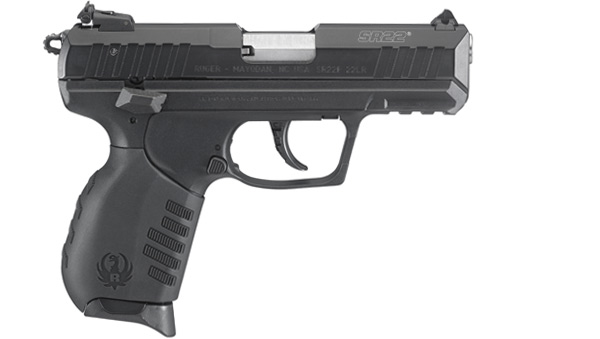
I don't get out to gun stores much, these days.  There's a variety of reasons for that, most of them personal to me, but anyway, I had completely missed Ruger's introduction of the SR22 rimfire pistol.


I saw, I handled, I gagged.  Look, I realize I've become a bit of a 'mudge about a variety of things, but here it is:  I cannot for the life of me figure out what this pistol would be for.

The most offensive part about the thing, covering any possible use to which it might be put, is that the safety is both frame-mounted and backwards. Up for fire, down for safe.


I don't think this is trivial, and for two reasons.  The first is the design itself.  The most ergonomic active safety systems yet devised are both found on John Browning's M1911 pistol:  the sear-blocking, frame-mounted thumb safety lever and the grip safety.  Now I think that great strides have been made to improve the implementation of those designs (with low-profile, semi-extended thumb safety levers and high-sweep ducktail grip safeties), but nothing I have seen has improved the design itself.

This is because there is a consistency across the M1911 design, and it works with a core ergonomic concept:  when you want to make the loud noise, you close your hand.  When you want to prevent the loud noise, you open your hand.  This fits conspicuously well with the sort of high-stress environment that a life-and-death encounter represents, and is simply intuitive in all lesser environments.  And so when you close your hand to take a solid firing grip, you naturally depress the grip safety, snap the thumb safety down to lock your hand into place, and let the trigger finger engage the trigger itself.  When disengaging, your trigger finger comes off the trigger and out of the guard, the thumb sweeps up snapping on the safety, the fingers relax and the grip safety re-engages as the hand comes completely off the gun.  Close, open. The name "Yankee Fist" is highly appropriate.

Something that works counter to this concept, I think, is just asking for trouble, and moreso the higher the stress level gets.  Now for years we've also had around the slide-mounted, up-for-fire safety lever--at least since the 1920s with the Walther PP.  I would say this is backward too, but at least it is usually mounted so high on the slide that it gets outside the most efficient reach of the thumb for normal hand opening/closing operations--requiring something deliberately different.  I find it interesting that the most efficient practitioners of this design have adopted the "straight-thumbs" approach as the best way to deal with the problem.  It's still not fully faithful to how the human hand works, but by stabbing the thumb forward at such a height that it effectively cams the lever upward, the goal is accomplished without completely inverting things.  And again, we've had this arrangement since at least the latter 1920s--it's been around, and is at least understood.  Many people have trained themselves quite effectively on nothing else, and although I don't like it, I can't argue with their success.  Just not for me.

This frame-mounted, backward thing though--the Ruger's lever lies beautifully under the thumb--I just don't get that.

And there's the second reason I think this is a really, really bad idea:  this safety will work backward from everything else that you might have.  Again, in a high-stress situation, this is not a recipe for success.  If the Ruger is the only gun you have, and you train well enough with it to overcome the problem, great.  Or perhaps you're one of those few who is cool enough under stress to remember precisely which gun you have on at the moment of truth, and go the appropriate direction for the safety at hand.

Look, I'm pretty well trained in gunhandling, and I would not want to stake my life on that.  I wouldn't even buy the gun as a plinker, on the off-chance that enough repetitions with it might confuse my response with a different gun at a really vital moment.  No thanks.

And that brings me around to the more general "what is it for?" question.  For me, the safety issue is enough to qualify the SR22 (or anything else designed like it--not to pick on Ruger specifically) for a "Waffenposselhaft Award" entry, no matter what your intended purpose might be.  But even beyond that, the question remains vague.

What's a .22 for?  Again, opinions vary, but it seems reasonable to posit:  plinking/fun gun, training, small-game hunting, and arguably personal defense.  (There may be, for some people some times, good reasons for going the.22 route for defense, but I certainly couldn't recommend it in general.)

Okay, let's run that list against the SR22.  Plinking/fun gun?  Sure--although as mentioned before I'd pass, because there are other .22s out there that are conspicuously better at ingraining good gunhandling habits.  Training?  Fail.  The whole purpose of training is to ingrain good habits, either gunhandling, marksmanship or both, and with a backward, non-ergonomic safety, I just can't imagine using this piece as an effective training exemplar.  Hunting?  At best, arguable.  There does seem to be some single-action capability, although employing it in the field against the decocking safety would not be intuitive, and the release is adequate but nothing compared to, say, a Ruger Mark II/III or Browning Buckmark, which are excellent field pieces, if a bit heavy and large.  (I'll shortly have another post about the need for a precision, small, lightweight field .22;  stay tuned.)  And defense?  Okay, let's say for argument's sake that the person in question really is best served by a .22, whether for reasons of recoil, gunhandling manipulation, or some other perfectly legitimate reason.  Is this the right .22?  If I (grit teeth) completely put aside the safety argument, since I've beaten that one to death already, it's again at best arguable.  I'm not a fan of DA/SA for defense pieces;  I'd rather an SAO with positive safety (think 1911) or DAO without manual safety (think Kahr or Centennial J) any day;  the SR22 combines the worst of all worlds with that backward safety.  It's not a particularly small piece, in any dimension;  my .40-caliber Kahr is smaller in every dimension, the same weight, with an amazingly sweet trigger, and passive internal safeties.  So if our .22 toter doesn't mind the size/weight combination, the DA/SA trigger system and decocking behavior of the safety lever, and either doesn't own a differently-operative piece or trains well enough with the SR22 to overcome any ergonomic conflicts, well then, it might work just fine.  I did note that the magazine did seem particularly smooth and well-designed, especially for a .22;  its biggest problem for carry will probably be that the baseplate is large enough to not lay perfectly flat against the body.  At least the baseplate is not sharp like a P35's is.  :-)

Anyway, I can't figure it out:  I tried, and came up short.  Other than distributing one to every FedThug available, as a trainer for whatever their main carry piece may be (go nuts guys!), I can't think of a good use for this piece.  The best I've been able to come up with is that the SR22 is intended to capture some of the market for the Walther P22--another piece that seems to be an answer in search of a question.

Perhaps others can educate me here?  Again, I'll admit my 'mudgery, but seriously, what's the functional argument?

Wednesday, July 27, 2011

Do not get caught by a bear in White.

Via Arctic Patriot I learned about a recent bear mauling in the Talkeetna Mountains, NE of Talkeetna itself.   This is remote country (I've hunted a tiny part of it) and certainly griz territory;  the basic story is that some teenage kids on the last stages of a wilderness expedition with an outdooring outfit (NOLS) got caught by a sow with cub, and injuries ranged from minor to pretty serious.

The first article I saw really didn't say much in the way of detail.  I learned more by looking at ADN, as a source.  The most recent story is here, with previous ones available in a link list therein.

Unfortunately, there appears to be a lot of CYA going on in that most recent article, which claims that the kids were "well-prepared" and that the attack was "unavoidable".  The "well-prepared" claim is clearly BS, as nobody seems to dispute that the first thing the nearest kids did was turn and run!  As well, although they did have pepper spray, it was apparently buried beyond reach at the moment of truth, and therefore useless.

As to the claim of "unavoidable", that is in no way conclusive from the information I've seen;  I suspect it is simply an easier explanation to give to distant parents and certainly less embarrassing to NOLS.  (You may note, in today's article, that the "outdoor experts" they quote are either NOLS, ex-NOLS, or the functionally similar American Alpine Institute.)

The CYA continues by trumpeting traditional defeatist arguments against using guns, while conveniently ignoring the liabilities of OC spray.  "Guns can give a person a false sense of security," but stick a can of magic spray in your pack, feel the breeze in your face, and let your worries melt away, eh?

I don't mean to harp on the kids, who seem to be in better shape than originally feared.  But it is a disservice to everyone to ignore that there was a failure here, and the failure was of what Jeff Cooper called "the combat mindset".  One of the kids apparently said this:

"I thought: 'I'm going to die,'" he told The Associated Press from his hospital bed in Anchorage. "I thought, 'This just can't be happening to me.'"

Those are the words of someone in Condition White.  As the old saying goes, "you are no more armed because you possess a gun than you are a musician because you possess a guitar".  They were not prepared for this emergency, mentally:  "[t]his just can't be happening to me" announces with crystal clarity that the speaker did not really believe it could happen to him at all.  They had a tool available (not the most failsafe one, certainly, but still, a tool), but apparently did not even keep it ready for emergency use!  Further, they did not keep their heads when they most needed to keep their heads, but rather did the very worst thing they could have done to provoke a predator to give chase.  That they may have been cool-headed after the action was concluded is great so far as it goes, but defending life often mitigates the subsequent need to preserve it.

This failure is not trivial--it is rather the whole enchilada.  Col. Cooper often said that of all the students who reported back that his training had saved their lives, not a one of them failed to credit the mindset training first, and only then any specific skill-at-arms.  The understanding that a fight could come to them at any time, from anywhere--that it could indeed "be happening to me", right now--and having a response already in mind--is what allowed them to move past dithering and into focused, directed action.

In this case, unless there's a whole lot more I don't know, the kids got lucky.  One can only hope that they realize this, among all the posturing about how "well-prepared" they were and how "unavoidable" the attack really was.

Sunday, July 24, 2011

Figures. Ohlson Mountain shooting site, meet 'progress'.

So it appears that some folks now want local shooting site Ohlson Mountain to get cut off.  Other than the simple loss of (yet another) place to shoot, for the usual disgusting reasons, this would remove one of the only free places to shoot that I know of.  (The cynic in me does not expect the local gun club to come to the rescue here, since they will benefit financially from forcing everyone who now uses Ohlson to use their range, with its restrictions.  Ah, politics.)  Just like the poll tax, of course, this "free" thing doesn't affect anyone of importance.

I'm about to submit the following either as a comment to the Homer News article, or as a separate LTE, because I just have to speak up.

When I first happened across Ohlson Mountain as a potential site for shooting, it struck me specifically that there were none of the usual prohibitions on the public's use of the site.  On one hand, it seemed a refreshing change from the rest of our sad society which seems to respond to every conceivable free-choice scenario with prohibition, restriction and regulation.  I spent quite some time making sure I wasn't missing something obvious (including visually confirming the depth of every prospective backstop) before partaking myself, and have since valued the site immensely as a local place to go, that notably does not insult the intelligence of that wide majority of us for whom no regulation is, or ever will be, necessary.

On the other hand, being an acute observer of the depressing march of "progress", there was another part of me that said, in parallel, "it's only a matter of time before someone does something legitimately stupid, and someone else decides that the answer is to use the power of the state to forcibly keep everyone out, including everyone who neither has done nor ever will do anything wrong."

And so, here we go, it seems.  Again.

I can certainly sympathize with the property owners here.   If it were my property, I would want to mitigate the risk of stray rounds as well.  But it is wrong to ask the state (in the guise of troopers, the borough, etc) to act as your own personal enforcement apparatus.  It is also wrong to trade our bedrock principle of individual accountability, for the historically empty promise that if we punish everyone equally, we'll all somehow benefit;  this is precisely the logic that has brought us the disastrous War on (Some) Drugs.

The worst part about this sort of thoroughly Faustian pact is that it doesn't even get people what they want.  Simply closing off the land by decree is no guarantee of increased safety.  Any one of us who discharges any round, anywhere, at any time, is already--and properly--personally liable for what happens between the time the loud noise happens and the time the projectile stops.  We also tend to forget that although we are all taught that the state is here to "protect" us, the courts have repeatedly ruled that the state is under NO obligation to protect any one of us individually, at all--to the considerable surprise of some who counted on it.  And it should be obvious, by now, using the War on Drugs and PATRIOT Act (as but two) examples, that the strategy of using the power of the state to control the behavior of others comes at a far heavier price than any benefit it might bestow.

I've been around long enough to know that these thoughts will most likely be ignored, usually with impunity.  Why, then, do I write them?  Because if people would be willing to consider a more rational approach to such a dilemma, they just might be surprised at what could happen.  I note with some sadness that nobody seems to have suggested the obvious "let's treat each other like adults" suggestion:  that simply raising the awareness of the risks involved might achieve what is needed here, without resorting to yet another decree that the decent don't need and the malicious or stupid will ignore anyway.

If it were my property downrange, the very first thing I would do is try to encourage volunteer signage at the backstops, informing people both of their responsibility for every round fired, and also of the simple fact that people live down there*.  (Jeff Cooper's Four Rules would be a great inclusion too, btw.)  I'd put the word out in newspapers, at the chamber, and at businesses that would agree to help me spread the word.  As well, I'd probably make regular visits to the site when people are likely to be shooting, to introduce myself and put a face on the downrange risk.  I'd ask the regulars if they'd do me the favor of looking out for me, making sure others were aware of the risks and even notifying me if someone refused to stop doing something stupid.  In short, I'd appeal to my community, and ask others to help me out.  I could not, in conscience, call upon the state to force everyone out on my behalf.

The usual response to this is that I cannot, in fact, trust my neighbors, who must instead be forcibly controlled for the greater safety of all of us.

Really?  Is that what we're about here?  Because that's not what I'm about.


___________
* Personally, I'd be there in a heartbeat, and would work vigorously to bring others of like mind.

I know, pissing in the wind.  Maybe I'm missing the hate mail, or something.  :-)