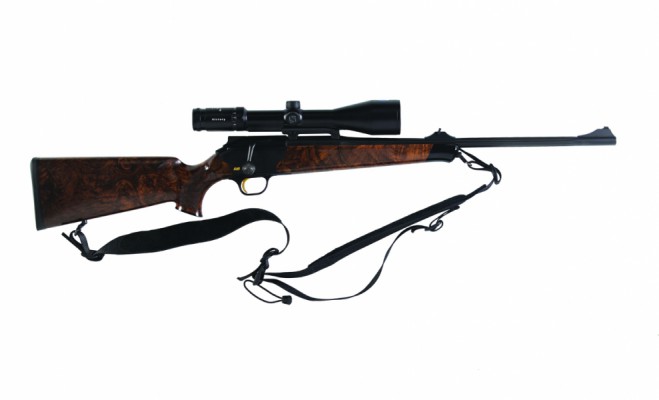
(Okay, so all this week I have been just giddy with the success of last weekend's introductory gunhandling sessions with Feral Daughters One and Two, which culminated not only in reliable hits with the Airsoft 1911 from about five yards, and also not only with exemplary attention to safety and basic handling, including load and reload...but also with conspicuous smiles. More on this effort later; for now, that's the context of my starting to think again about the broader context of airgunnery for training.)
I wanted to set down a couple more thoughts about the use of precision pellet guns for training, as the landscape has evolved a bit since I last did that. I've now been freshly reminded of the viability of using appropriate Airsoft replicas for true gunhandling, and really for any training in which the gunhandling is more important than great precision in marksmanship...but in the end, there will also remain a need for low-cost, high-volume training using something more precise.
Previously, I've written on the Scout-Rod concept, and I'm still keen on making this happen. The problem of course is that even aside from the ridiculous "safety" on the otherwise-excellent Benjamin Marauder base gun, there would still appear to be much custom work to do to get it up and running in full form, and of course along with the base gun, that's expensive. But then I noticed the Diana Stormrider, which seems more promising in several ways, especially with the ability to add an additional barrelband for the possibility of a true Scout Scope setup without extensive gunsmithing.
And then today, I happened to notice both the Diana Trail Scout, and also the Diana Mauser K98 repeater. Both of these are at the very least, interesting options!
The Trail Scout is clearly a derivative of the Stormrider, with the same bolt and breechblock, magazine, trigger and safety group, sight setup, and presumably it would accept the same second barrelband, if possibly requiring some stock inletting. The Trail Scout seems to be about half the cost of the Stormrider, runs on CO2 instead of HPA, and currently only comes in synthetic stock garb. Would CO2 be the way to go? It sure might. The Stormrider produces velocities, in .177" caliber, high enough that you can (maybe) start to lose some precision, and it seems to get about 20 good shots on a fill, with attendant blast for the not-strictly-necessary oomph. The CO2 gun advertises much more sedate velocities, and 100 shots on a fill, using three standard powerlets. Presuming the CO2 powerplant is as accurate a platform as HPA, this lower cost option might be a great training tool! (Hell, might need to have both...)
The K98 Mauser replica was also a pleasant surprise. I'd seen Tom Gaylord cover the single-shot version of this rifle before, and hadn't paid it much attention because I've already got a wonderful trainer for single shots in the Air Venturi Bronco. But this one is a repeater...and hmm, look at that bolt!
I'm pretty sure that is the closest I've seen to a full-size rifle bolt on a non-Airsoft airgun. No, it's not going to duplicate a real Mauser bolt in travel or even in feel, but it is so much closer than anything else I've seen, at least in a precision, rifled pellet gun, that it immediately becomes a serious contender for a precision trainer. It's not cheap, by comparison to other HPA alternatives like the Stormrider, and it will have some of its own flaws--for starters, a true scout scope is going to require true custom work, the "safety" is a...let's call it comically primitive crossbolt in the trigger itself (good gawd, people!), and it probably will fit the same 20-shots-per-fill, 200-bar fill pressure, 20-foot-pound envelope as the Stormrider. But hmm...that bolt, plus the onboard sights, the friendly stock (for shortening and mounting a Ching Sling), and what appears to be an overall excellent base platform...well, I now need to meet one, and am glad that the option exists!
Finally, I'm also curious to dig a little more into what SIG has been doing with EBR-pattern, semiauto rifled pellet guns. This seems a distinct "third", in terms of training importance (where "first" would imply Airsoft blowback replicas capable of precision gunhandling and gross marksmanship, and "second" would imply rifled pellet guns capable of gross gunhandling and precision marksmanship), but those lines are of course at least a little blurry. But still, to have the ability for some real rifled-pellet precision, in a semiauto*, AR(-ish) pattern carbine, would seem to be quite useful, and certainly worth the initial investment for inexpensive trigger time.
Anyway, SIG seems to have some options in their MCX and MPX rifles, and boy, I'd love to meet those too, to get an idea of what they're like. (Tom has covered both an MCX variant and an MPX variant, and I'll cogitate further on the idea.)
______________________
* In the pistol realm, I already went through this thinking a bit ago, though I don't seem to have written about it specifically yet; the core idea is to come up with a faithful replica of a "semiauto" design that can shoot rifled pellets rather than Airsoft or steel BBs--to be able to work on precision, across multiple shots. Pistols are difficult for this, at least for 1911 lovers like me: no pistol design I've yet seen seems to have been able to combine both rifled-pellet feeding, and a single-action trigger. However, what is available--and what I would argue is viable enough for the concept--are a few designs employing a small internal rotary magazine, against a "double-action" style trigger (technically, this is really a CO2-powerplant revolver, in the guise of an auto pistol), and no blowback. It's by no means perfect--I'd want the blowback and reciprocating slide if I could get it, and of course I'd want the option of a 1911 design as well--but then I stopped and considered the S&W M&P 45 variant simply on its own terms...and I think it's worth pursuing. Whether or not the 1911 might be a preferred platform, this still captures a good base gun to train on (the M&P is well-established) and the long trigger is a good exemplar of striker-fired pistols like my own beloved Kahr. I figure: use it for precision singles and doubles; the long trigger roll is the focus of the exercise here, and requires the same sort of sight-settling focus that blowback provides, without needing the actual blowback. No, it won't combine with authentic reloads or clearance drills, but it is pretty clearly the best option for precision work in a pistol that is anywhere close to ergonomically authentic to a design you'd want to train for.
Showing posts with label Scout. Show all posts
Thursday, April 30, 2020
Tuesday, July 17, 2018
Well hello there, Diana Stormrider.
Somewhat by accident, I recently noticed the Diana Stormrider precharged pneumatic air rifle. Actually noticed it. I've been a bit dormant on the bangy stuff lately, and hadn't even remembered that Tom Gaylord did a series on it, just last year.
You know, that there's an interesting gun, for my contemplation of a suitable platform to come up with an airgun Scout.
Things to like:
Promising, in toto. I find it interesting that it's offered (by Pyramyd Air at least) as a kit, along with its own hand pump. Someone is paying attention to the success of the Benjamin Discovery!
Anyway, bookmarked for future reference and contemplation. Interesting indeed!
You know, that there's an interesting gun, for my contemplation of a suitable platform to come up with an airgun Scout.
Things to like:
- Sights! Out of the box this thing has real iron sights, and the platform looks promising both for ghost-ring irons and even for a scout scope. One could mount a proper ghost-ring aperture at the back of the receiver on the dovetail with little fuss, and by discarding the "open" rear sight, adding a second barrel band, and adjusting the position of the two bands, have a perfect mount for a real Leupold Scout Scope.
- The manual safety switch is not perfect, but it is not insane like the Marauder's, and because it's in front of the trigger guard rather than at the back, it's more ergonomic than the Discovery. It's something one could train with.
- The interchangeable magazine and single-shot tray is good design--I would argue it is in fact the right design for a beginner and trainer rifle. Any "airScout" really should be a manual repeater.
- Stock is old-fashioned wood, and would be very amenable both to shortening LOP and rounding toe and heel, and also to mounting a proper Ching Sling.
- The bolt system certainly looks pretty robust, and with a longer throw than on the Disco or M-Rod, although it's still going to be shorter than a .22 rimfire.
- It's light and svelte, from reports, and actually looks like a traditional rifle, instead of the aggravatingly ubiquitous pistol grip pattern of most of the newer offerings. IOW, it would rate reasonably well on Jeff Cooper's "handiness index", which is the total height of the rifle from bottom of pistol grip to top of sight system.
- It's reasonably (reasonably) hand-pump friendly, and sounds like it may get over 20 usable and accurate shots per fill--with enough available oomph to hunt with.
A couple of mostly minor drawbacks:
- It uses a 3000psi fill, rather than the Disco's 2000psi fill. That's going to be significant if using a hand pump. The Disco's ability to deliver many shots on a lower fill pressure, albeit not necessarily at a hunting power level, does still set it apart from others in its class.
- It's not sound suppressed--but then neither is the Disco. This is reasonably minor, in light of the advantages.
Promising, in toto. I find it interesting that it's offered (by Pyramyd Air at least) as a kit, along with its own hand pump. Someone is paying attention to the success of the Benjamin Discovery!
Anyway, bookmarked for future reference and contemplation. Interesting indeed!
Labels:
Airguns,
Benjamin Discovery,
Diana Stormrider,
Kids,
Scout
Sunday, April 10, 2016
See, now this is an intelligent contribution to the safety discussion.
I don't regularly follow John Farnam these days, but he remains a valuable observer on tactics, technique and attitude, in much the way that I recall Mas Ayoob used to be. And so I just ran across this post from Farnam, on the use of the rifle's manual safety, specifically within the context of the hot range.
It's worth reading, and considering. Unlike anonymous commenters who try to suggest that Onlier Operatorer types are somehow above Cooper's safety rules, Farnam has documentable street cred, and a known capacity as an analyst.
And so:
The whole article is worth reading; one of Farnam's particular eloquences is his ongoing defense of the hot range (as ultimately safer than the cold range), and you get a lot of it here.
This discussion of the rifle safety is interesting. For a rifle with a truly ergonomic safety, like the Steyr Scout's tang-mounted roll switch, I don't really think I could be any faster one way or the other, as with a 1911 pistol. Many other boltgun safeties are nearly as good as that (e.g., M700, M70, Sako). But most "battle rifle" and "battle carbine" safeties I've met are not ergonomic to engage; one has to shift hand positions to do it, and that does take time.
And there is this: I suspect that Farnam's point is both in acknowledging a measurable raw speed value, and also in the attitude surrounding the use of the manual safety. We should remember that one can observe all Four Rules with a cocked and unlocked piece; none of the Rules makes any mention of a manual safety anywhere. Presentation of the piece for firing always, always includes disengaging the weapon's manual safeties, if it has any. For any drill that has the student randomly in and out of his sights, this doesn't need to change: whether or not he re-engages a safety in between, every time the gun comes up to fire, that safety gets wiped off.
So, the discussion of when to re-engage any manual safety becomes intentionally decoupled from the discussion of when to dis-engage...and that does seem like an important observation to make. There is no need to use a manual safety as any sort of bolster to Rule Three, and in fact it might be too easy to rely on it, however slightly, as a separate "proof" of a safe condition.
If it's really the attitude, and not the hardware--as we all love to say--then Farnam makes a good point here. I'm happy for the reminder.
It's worth reading, and considering. Unlike anonymous commenters who try to suggest that Onlier Operatorer types are somehow above Cooper's safety rules, Farnam has documentable street cred, and a known capacity as an analyst.
And so:
Most modern pistols (Glock, XD, M&P, SIG320, Walther PPQ, H&K VP9, FNS, Ruger AA) don’t have manual safeties, yet we still routinely move with them in our hands during training exercises, relying mostly upon a strong “register” position of the trigger-finger to prevent NDs. Still, we don’t prevent them all, no matter how careful we try to be!
Can we do the same with our rifles, or do we insist students keep the manual safety in the “on” position except when in the process of firing intentionally?
My answer to that question is:
Yes!
I accept it either way, but I teach the former.
Of course, I tell students that I want the manual safety “on” when the rifle is slung, and I want them to check it frequently. Scant argument there.
However, when the rifle is in their hands, the position of the manual safety becomes optional.
The whole article is worth reading; one of Farnam's particular eloquences is his ongoing defense of the hot range (as ultimately safer than the cold range), and you get a lot of it here.
This discussion of the rifle safety is interesting. For a rifle with a truly ergonomic safety, like the Steyr Scout's tang-mounted roll switch, I don't really think I could be any faster one way or the other, as with a 1911 pistol. Many other boltgun safeties are nearly as good as that (e.g., M700, M70, Sako). But most "battle rifle" and "battle carbine" safeties I've met are not ergonomic to engage; one has to shift hand positions to do it, and that does take time.
And there is this: I suspect that Farnam's point is both in acknowledging a measurable raw speed value, and also in the attitude surrounding the use of the manual safety. We should remember that one can observe all Four Rules with a cocked and unlocked piece; none of the Rules makes any mention of a manual safety anywhere. Presentation of the piece for firing always, always includes disengaging the weapon's manual safeties, if it has any. For any drill that has the student randomly in and out of his sights, this doesn't need to change: whether or not he re-engages a safety in between, every time the gun comes up to fire, that safety gets wiped off.
So, the discussion of when to re-engage any manual safety becomes intentionally decoupled from the discussion of when to dis-engage...and that does seem like an important observation to make. There is no need to use a manual safety as any sort of bolster to Rule Three, and in fact it might be too easy to rely on it, however slightly, as a separate "proof" of a safe condition.
If it's really the attitude, and not the hardware--as we all love to say--then Farnam makes a good point here. I'm happy for the reminder.
Labels:
Carbines,
Clint Smith,
Education,
Jeff Cooper,
John Farnam,
Pistols,
Rifles,
Safety,
Scout
Saturday, January 23, 2016
Interesting item? The RifleMann Sling.
Via Mas Ayoob, I now hear of the RifleMann Sling, which might prove to be interesting.
Via the Galco website, there are a few further pictures, but I'll have to hear and see more before truly concluding further. Based just on the pictures, I wonder if it may be more a takeoff of the Safari Ching Sling, than on the original design by Eric Ching. (Galco certainly seems to consider the Safari Ching Sling to be a full replacement for the original, which it is absolutely not*; I will be a little bit naturally skeptical at Galco's marketing in this regard.) And I can't tell whether the use on the shooting arm is anything more than just "hasty"-ing it around the outside, or not. It seems that this might have some utility somewhere, but it's missing a huge part of the "gun mount" without any sort of support under the rifle, and it would be hard to imagine that the lockup is anywhere near as solid.
I'm willing to be convinced, but the standard is high. Anyone else hear any scuttlebutt?
______________
* It's a simple matter of speed, and fidelity to the original idea. One of the features of the original Ching Sling is that you can get into it--solid lockup--faster than you can acquire your supported position. The Safari Ching Sling is a great idea when you're limited to two sling studs (I use mine whenever borrowing a rifle that doesn't have three studs), and certainly gives great lockup, but there is no way it can ever be as fast and forgiving as the original. If you simply want a solid sling on a two-stud rifle, the Safari Ching is probably the best thing going. But if you want the full, original idea--the ideal sling for solid lockup at maximum speed--you want the original.
Wednesday, November 11, 2015
derp
I know I've said this before--please forgive the vent--but I just can't get over the sheer amount of derp in the manual safety design of the Benjamin Marauder*. I keep thinking about the idea of building a "school set" of air rifles for students to learn on and train with, and the basic Marauder design (reliable boltie 10rd repeater, internally suppressed, adjustable power, hand-pump friendly PCP reservoir, topflight trigger, conspicuously accurate barrel) keeps coming up as being almost the obvious platform choice.
But seriously...just look at this:
Yes, you can click to make it bigger, but why would you?
So...what you're saying is that in order to on-safe my loaded piece, I stick my finger inside the trigger guard and pull the lever to the rear.
derp derp derp
Look, I know I'm a pain in the ass about gun safety, and about gun safeties, and ergonomics in general...but at least there is a consistency to my own neuroses, and I'd like to think that a design like the above would have been laughed into oblivion before ever even coming up for serious approval, on the simple account of maybe, just maybe, the ergonomic action to make the loud noise and the ergonomic action to prevent the loud noise SHOULD NOT BE THE SAME. But this damned thing actually made it out of committee and through legal!
The Garand safety is bad enough, but at least there you can say that the on-safe motion is outside the trigger guard. This...I just don't know if I could ever see using it as a training tool--unless I just ignored the safety lever entirely as a...well, a safer option. I still think that it wouldn't take too much effort to build a dogleg connector to a more ergonomic lever or button, and then the M-Rod would be nearly authentically there as a platform, lacking only iron sights, a short LOP, and if optics are important, a means of mounting an IER glass forward over the shroud.
Until then...well, I keep wondering how to turn a Benjamin Discovery into a repeater with sound suppression, or if it's possible to drop a Marauder pistol (which uses a simple trigger-blocking cross bolt safety...crude, but at least not idiotic) into a rifle stock.
Grrr. So close on the whole...and yet for training, so completely unusable.
___________________
* Not to pick on the M-Rod specifically; the basic trigger group/safety design was around well before the Marauder was launched, and lots of airguns, especially spring-piston breakbarrels, use some variation of the damned thing. (I suspect it is probably a very economical way to get a complete trigger/safety group into a stock with minimal cutting.) I harp on the Marauder because it is such an otherwise outstanding piece of kit, that the derp hurts that much more.
Wednesday, October 14, 2015
Fun shop research.
Got a few minutes today to stop in at a local fun shop; a few items seemed worth recording here.
Yeah, that bolt throw is really short. I was hoping it wouldn't feel that much so, but it does. That's just not going to be an honorable trainer for a real turnbolt centerfire. I suspect there's still a lot of value in the "Scout airgun" concept, but I may want/need to modify my thinking a bit on it. Boltwork is important. (Maybe when--if--my financial ship comes in and I can fully go at a new custom project, I'll try to convince someone like Tom Gaylord, or a Dennis Quackenbush, or some other innovator in the airgun space, to work with me on a concept piece. I still think that some sort of slow-indexing cam is a worthwhile pursuit, to get a faithful bolt function.)
Conceivably the not-fully-optimized airgun could be thought of more as an adjunct piece to a carefully plan, that includes both live- and dry-fire of the centerfire Scout, live-fire airgun focused on singles, and/or live-fire rimfire. After all, so much useful work can be done dry, with a manual repeater, and of course that would be the very bolt to practice on... okay, set cogitate mode on.
I do still want me a P-Rod, though. The carbine length is nice, and with the right sighting arrangement it should be a nice workhorse. Downside: the dang stock is too long, and doesn't lend itself well to shortening; there is an AR stock adapter available but believe it or not the shortest LOP is still too long. (I suspect there's a good answer available, but haven't found it yet.)
Yeah, okay, I really am on to something here: the Disco is impressive. It looks heavier and bigger than it really is, and should prove most useful for working with the small-statured. Stock is workable wood, which means shortening LOP and adding Ching sling studs will be simple. It shoulders naturally, and in this age of insistence on carbine-style vertical pistol grips it actually feels like an honest-to-goodness rifle. Safety is indeed acceptably located--would be better at front of trigger guard rather than rear, but it will do. Rear sight seems plenty good for an open sight, but of course I'll discard that and put a ghost-ring on instead, and probably replace the front with a solid square post.
The bolt seems solid enough. but the action is not "positive". As a reliable teaching rifle, it is probably perfect. I'd love to see positive clicks and snaps, but that is really just preference talking.
I like the Disco more and more the more I learn about it. It may not have the repeating mechanism or the sound-suppression of the Marauder, but its safety is vastly superior to its upscale brother, and it is both lighter and shorter besides. It's quite possible that the route I will take may not to go to the Marauder at all, but rather to have a custom Disco with sound suppression. Will think further.
It is indeed luxuriously short. (Muzzle blast must be impressive to the shooter.) Short enough that I admit I have, somewhat surprisingly, a visceral hesitation to it. Sure, it's probably irrational, but I can't deny that it's there. Sight radius will necessarily be limited. The forward sling stud would necessarily be right there at the muzzle. And I believe the horror stories about shot hands after shearing off vertical foregrips during chambering. (I'm not a vertical-foregrip kinda guy in the first place, but still. This is a pump shotgun, after all; one works the action briskly, and the idea that your hand winds up right out there at the end of the stroke is somewhat sobering. One might reasonably observe that the pistol is even shorter, but the pistol's chambering stroke is away from the muzzle, not toward it.)
And yet there is much to like about the piece. It is, if nothing else, ingenious. Controls seem reasonably sized, positive, and easy to reach. 14 rounds of 12-gauge in a package this compact is impressive to my "size efficiency" aesthetic. It doesn't feel nearly as heavy as it really is.
So, jury's still out. But I'm glad it's here.
Anyway, the G43 does indeed dispense with the "feels like a two-by-four" problem, and that makes me happy. It's not the thinnest of the breed, and it won't displace my interest in Kahr, Shield, XD-S, and Solo, but it is certainly of the breed, and that will probably make it the Glock I'll go to when I want to get serious about Glock-fu. The rest of the gun was...Glock. Which means it seems well-built, simple, logical, and probably runs like a top.
He insisted I look at a PX4 Beretta for how "comfortable" and "safe" it was; I said upfront I could guarantee I wouldn't like it, and that my safety was between my ears. Fat in the hand, DA/SA fire control, decocking slide mounted safety, and size inefficient. I'm sure it runs fine, and some might like it, but after hearing me working over the G43 and discussing what it was about that piece which interested me, one would think he could manage a little less tone-deafness than this.
Perhaps I should have made it a point to make a point, but honestly it's frustrating that one should have to do that, and given the reasonably clear signals he ignored in the first place, I'm not sure it would have made much difference anyway.
The fun shop...should be, damn it. But sometimes, research can be painful.
Benjamin P-Rod airgun.
I had remembered that this place had carried a P-Rod before; since this "pistol" uses the same bolt mechanism as the M-Rod rifle I've been considering for the Scout-Rod concept, I thought I'd put it to shoulder with that in mind.Yeah, that bolt throw is really short. I was hoping it wouldn't feel that much so, but it does. That's just not going to be an honorable trainer for a real turnbolt centerfire. I suspect there's still a lot of value in the "Scout airgun" concept, but I may want/need to modify my thinking a bit on it. Boltwork is important. (Maybe when--if--my financial ship comes in and I can fully go at a new custom project, I'll try to convince someone like Tom Gaylord, or a Dennis Quackenbush, or some other innovator in the airgun space, to work with me on a concept piece. I still think that some sort of slow-indexing cam is a worthwhile pursuit, to get a faithful bolt function.)
Conceivably the not-fully-optimized airgun could be thought of more as an adjunct piece to a carefully plan, that includes both live- and dry-fire of the centerfire Scout, live-fire airgun focused on singles, and/or live-fire rimfire. After all, so much useful work can be done dry, with a manual repeater, and of course that would be the very bolt to practice on... okay, set cogitate mode on.
I do still want me a P-Rod, though. The carbine length is nice, and with the right sighting arrangement it should be a nice workhorse. Downside: the dang stock is too long, and doesn't lend itself well to shortening; there is an AR stock adapter available but believe it or not the shortest LOP is still too long. (I suspect there's a good answer available, but haven't found it yet.)
Benjamin Discovery airgun.
This air rifle is what I think I'd go to, if asked to put together a "classroom set" of noob training guns. Since they had one, I thought I'd look at it in that context.Yeah, okay, I really am on to something here: the Disco is impressive. It looks heavier and bigger than it really is, and should prove most useful for working with the small-statured. Stock is workable wood, which means shortening LOP and adding Ching sling studs will be simple. It shoulders naturally, and in this age of insistence on carbine-style vertical pistol grips it actually feels like an honest-to-goodness rifle. Safety is indeed acceptably located--would be better at front of trigger guard rather than rear, but it will do. Rear sight seems plenty good for an open sight, but of course I'll discard that and put a ghost-ring on instead, and probably replace the front with a solid square post.
The bolt seems solid enough. but the action is not "positive". As a reliable teaching rifle, it is probably perfect. I'd love to see positive clicks and snaps, but that is really just preference talking.
I like the Disco more and more the more I learn about it. It may not have the repeating mechanism or the sound-suppression of the Marauder, but its safety is vastly superior to its upscale brother, and it is both lighter and shorter besides. It's quite possible that the route I will take may not to go to the Marauder at all, but rather to have a custom Disco with sound suppression. Will think further.
Kel-Tec KSG shotgun.
Ah, the storied and famed KSG. And now I've met one in person.It is indeed luxuriously short. (Muzzle blast must be impressive to the shooter.) Short enough that I admit I have, somewhat surprisingly, a visceral hesitation to it. Sure, it's probably irrational, but I can't deny that it's there. Sight radius will necessarily be limited. The forward sling stud would necessarily be right there at the muzzle. And I believe the horror stories about shot hands after shearing off vertical foregrips during chambering. (I'm not a vertical-foregrip kinda guy in the first place, but still. This is a pump shotgun, after all; one works the action briskly, and the idea that your hand winds up right out there at the end of the stroke is somewhat sobering. One might reasonably observe that the pistol is even shorter, but the pistol's chambering stroke is away from the muzzle, not toward it.)
And yet there is much to like about the piece. It is, if nothing else, ingenious. Controls seem reasonably sized, positive, and easy to reach. 14 rounds of 12-gauge in a package this compact is impressive to my "size efficiency" aesthetic. It doesn't feel nearly as heavy as it really is.
So, jury's still out. But I'm glad it's here.
Glock G43 9mm.
I happened to notice one of the new Glock G43 single-stack 9mm pistols in the rack, and of course had to see that. No, I've never been a Glock guy, but really, that has been mostly because of two very specific personal reasons: 1) they just feel like two-by-fours in my hand, and 2) the trigger has always caused my trigger finger to nearly go completely to sleep over the course of 20 shots or so. (I first noticed that on my ex-wife's G23 a lot of years ago, and every Glock I've shot since then does the same thing. I really wanted to like that G23, but I kinda need to retain sensitivity in my trigger finger, ya know?)Anyway, the G43 does indeed dispense with the "feels like a two-by-four" problem, and that makes me happy. It's not the thinnest of the breed, and it won't displace my interest in Kahr, Shield, XD-S, and Solo, but it is certainly of the breed, and that will probably make it the Glock I'll go to when I want to get serious about Glock-fu. The rest of the gun was...Glock. Which means it seems well-built, simple, logical, and probably runs like a top.
Counter-jockeys.
Le sigh. I think I've run into this particular counter-jockey before; he'll make you work to avoid having to tell him how full of shit he is about...oh hell, a lot. His ignorance about airguns is nearly weapons-quality, and he shows no sign of being really interested in learning otherwise. His gunhandling was awful, as was his attention; he didn't even seem to notice me repositioning myself nearly constantly whenever he was handling something.He insisted I look at a PX4 Beretta for how "comfortable" and "safe" it was; I said upfront I could guarantee I wouldn't like it, and that my safety was between my ears. Fat in the hand, DA/SA fire control, decocking slide mounted safety, and size inefficient. I'm sure it runs fine, and some might like it, but after hearing me working over the G43 and discussing what it was about that piece which interested me, one would think he could manage a little less tone-deafness than this.
Perhaps I should have made it a point to make a point, but honestly it's frustrating that one should have to do that, and given the reasonably clear signals he ignored in the first place, I'm not sure it would have made much difference anyway.
The fun shop...should be, damn it. But sometimes, research can be painful.
Tuesday, October 6, 2015
A metaphysical lament. When those who say they get it, don't.
As I was writing this, I had already been thinking about making it into a post of its own, because the topic seemed to be worth it. The following was inspired by one of Mama's insightful comments, and once Blogger told me it was too long to be a comment, it was reasonably easy to say, "okay, Blogger, fine...I'll make it into its own post."
As a "contextual continuity clue": the following relates to several posts I've got here at Rifleman Savant, in which something relating to a Jeff Cooper topic--scout rifles, Ching slings, gunhandling technique, etc.--struck me as so far off the mark of what Cooper actually said or intended, that I felt the need to vent about it. Mama's comment got me thinking about that, and I responded as follows:
Maybe it's just a normal phenomenon that accompanies middle age, but I am really starting to grasp the wistful frustration that I so often read as a younger man (without really understanding) in Jeff Cooper's work. Or, maybe it is a natural outgrowth of a long-cultivated appreciation of deliberate design. (And really, I suspect strongly those two things are quite related.) But whatever the reason, it seems like the "...how often they do very badly at it" observation comes frequently in recent years.
I'm certainly not without my own history of jumping in to something before fully understanding it, but I like to think that I am learning that it always--always, without exception--fails to achieve full value, or at least full synergistic value. Probably these days I go too far the other way, where the biggest risk is in missing the window of time for which the whole idea has currency.
With something like this [a "scout rifle" missing critical features or implementing others badly], or like my recent lament about misunderstanding the technique of the speed sling, I wonder if the bigger problem is less the people whose well-intentioned exuberance carries them into a place they do not understand, and more the problem of chest-thumpery among those who purport to know, but don't. How do the consciously ignorant know that they are not following the unconsciously or willfully ignorant?
The position I'm in myself is a real challenge, in this regard. Anent the observations and teachings of Jeff Cooper, I tend to minimize how much I actually know, since 1) it's kinda my personality in general (I like being underestimated), and 2) I don't have a CV of "official" credentials that say I know what I know. But know it I do, both because I have long paid really close attention to matters of design and the history of design, and because I have tested nearly all of it myself and understand why it works from that perspective. And so when something misses the mark, it jumps out at me like nails on chalkboard, and I can both quote chapter and verse, and then defend it extemporaneously.
But who am I, really, to speak with authority on it in the first place? I only met Col. Cooper, in person, once. I have never "been in a gunfight" (and am quite happy about that, no joke). I'm no sort of master marksman, nor particularly fast. I've never got into formal competition, and I get quite a bit less trigger time than it would require to impress a good number of people. And so I try, at least, to minimize my own authority, because I can't really argue that I have it. Shooting, for good or ill, seems to carry an expectation that "experience" equals "analysis".
On the flip side, I am reminded of how much I really do know, and at what level of explication and depth, pretty much every time I engage with someone else, even those with years of shooting experience. I couldn't even tell you the number of people I've met who know simply astonishing minutiae about how to wrest a tenth of an inch of group size from their precision fitted boltgun, at exactly 100 yards, from a bench--who have no idea how to use their own body, much less a shooting sling, to shoot from an unsupported field position with any stability; or how to zero their rifle to optimize a "maximum point-blank range" for what they will be most likely to encounter in the field; or how to manage their ammunition supply without looking at it; or even how to run the bolt from the shoulder... It's a little better for pistolcraft, but not a lot. There's been a depressing resurgence in the concept of unsighted pistol fire, usually declaring loudly a complete non-understanding of the flash sight picture. The "high-speed, low-drag" tactards have convinced far too many that "two to the chest, one to the head" is nothing but a speed drill, rather than the observation-and-problem-solving technique that it is. The "cold range" mentality, as understandable as it can seem, continues to retard any general improvement in safe field gunhandling. And so on.
It's hard to say simply that people need to be more observant, although that seems like an obvious part of the solution. "Try it yourself, before you believe or disbelieve" would seem to be another obvious one, as would "go to the source, after you hear it second-hand". But a really substantial part of the problem is also those who stand up and loudly say "Lookit me, I know!", and then don't. When it comes to things that Cooper taught (both the gold and the stuff that really does need re-thinking), I usually know, immediately, when someone is wrong. But does that make me right? I struggle with that, but I also don't want to see such an immense reservoir of knowledge and history simply forgotten, or worse, revisioned by people who didn't really understand it in the first place.
Sorry. Metaphysical lament.
Labels:
Education,
Irony,
Jeff Cooper,
Pistols,
Rifles,
Rob Pincus,
Safety,
Scout,
Slings,
Training
Thursday, October 1, 2015
Apparently Mossberg has been busy.
I haven't paid hardly any attention to Mossberg in...a long time. By complete accident today, I encountered a couple of items that seem quite interesting.
Scout Rifle
I never realized they had an entry in the "scout rifle" space, but lookee here:
Oh, I can immediately see problems. It doesn't make weight. The glass on the "with-glass" model seems to offer most of the problems of a conventional eye relief without delivering the value of a true intermediate eye relief. The rail with integrated ghost-ring sight is indeed nice, but it ruins access to the loading/ejection port without offering anything of real value. The bolt design appears to be push-feed, plunger-eject, and sliding-plate-extract--exactly what the Scout Conferences codified as the configuration of last choice*. The LOP is too long, with no apparent means of adjustment. And there is no stud for a Ching Sling.
But at least someone is trying, and there are a couple of nice features here. The ability to use both AR10 and M14 magazines? Yeah, that seems like a goodness thing--provided it turns out to be suitably rugged and reliable. The trigger may be nice as well, but I've got no sense of field feedback on it yet.
All in all, from the look of it, this might yet be a decent platform for the concept. It should be reasonably trivial to shorten the LOP and round the buttpad, cut out the rail space obstructing the objection port (or replace with a more suitable alternative), and add a middle stud for a Ching Sling. Acquire a Leupold M8 2.5x Scout Scope and mount it as low as possible with QD rings, add the Ching Sling itself, and include some magazines, and--again, provided it runs--this might be a very nice little rifle. It would have the magazine advantage over the Ruger, but require a bit more fiddling to get it close enough to spec to get the complete system synergy--and the Ruger's bolt is closer to the Scout Conference spec. Hey, if nothing else, choice is good, and I'm happy to see it!
Lever Gun
I also--and again, accidentally--ran across this levergun, offered both as a 6-shot .30/30 and a 14-shot rimfire:
This struck me as a cross between "very encouraging" and "total facepalm". On the "encouraging" side, I love the adjustable LOP idea, and a tang safety on a levergun is the right way to include what is arguably a not-strictly-necessary feature in the first place. The front sight base seems reasonably sturdy, and the rear receiver ring should both permit a compact ghost-ring sight, and clear access to the ejection port. Very nice. I've got no idea how it runs or how the trigger is, but presumably any kinks could be worked out with some comparatively light gunsmithing.
Then I noticed the fore-end rail space.
Seriously, Mossberg? You put rails on all sides except the top? Okay, look, I admit I don't really speak tactard in the first place, but I think most of us would look for a top rail first, and then maybe--maybe--a bottom. One of the principal attractions of the levergun in the first place is its luxurious flatness, and side rails would seem to be inherently counterproductive to that end.
Look, it's a levergun, not a plumbing main. The more stuff you hang off those rails, the further away you get from what attracted you to the design in the first place.
Despite that irritation, though--a single rail on top would have permitted scout scope or dot sight options and still allowed a svelte fore-end--I like the idea of this piece, and hope I get to meet one some day. May it sell well enough that Mossberg offers it in other calibers too--I'd love to see .45 Colt or .44 Mag, and even .357 is a worthy option for an iron-sight carbine.
Youth Boltgun
Finally, Mossberg also seems to offer a youth-scaled rimfire boltgun:
I'll have to look into this one some more, but I like the concept of the single-shot adapter/plug, plus the ability to take 10-round magazines as well. Gives the kid something to grow into. I've no idea about trigger or accuracy, but the safety seems well-located, the receiver sports a dovetail that should permit a good ghost-ring rear sight, it's light enough and looks amenable to some light gunsmithing should that prove necessary. The fore-end looks a little short for a proper shooting sling, but I'd have to see it in a kid's hands to know if it was too short. The LOP is just about right for adults (12.25") but should be shorter for kids; since it's wood, this should not prove to be a daunting problem.
Again, I'd love to meet one and see how it feels in the hands.
So, cool! Mossberg has been busy. Will have to cogitate, investigate, and see what if anything comes of it. :-)
_____________________
* Once again, full disclosure is that even the Steyr Scout is not controlled-feed, nor inertial-eject. The Scout Conferences were clear enough in their preference for controlled-feed, inertial-eject, full-claw-extract...but Cooper must not have thought it a deal-breaker for the production Scout, as I'm not sure he ever even mentioned the Steyr SBS's use of plunger-eject and Sako-style mini-claw extractor. The Steyr also has restricted access to its ejection port, and (just barely) doesn't "make weight" either. Clearly, this arrangement can run just fine despite being "out-of-spec", and I always try to apply a few grains of salt when evaluating another take on the concept. :-)
Thursday, August 6, 2015
Now that was more like it.
Got back to the zeroing range today. After last week's frustrating attempt with handloads, and without the time to find and remedy the problem at home, I ponied up for some good factory loads, and today was...much better.
I was a bit paranoid--after all, maybe it was just me: you know, my shooting. So I brought some of that good old M80 ball to shoot first, just so I could see if I could hit anything, and see where my sights might have been left over after last week. So, at the 100 yard line, I shot my first three.
Well hell, that's a lot more satisfactory than anything I did a week ago. The aim point was the diamond to the lower left, so the group is about 2.5" high and 2" right. And importantly, it's a useful group, at a bit over an inch in dispersion.
Okay then, that's where the 147-grain load hits. Lovely. How about the Barnes VOR-TX 165-grain load?
The first shot is the lowest one. Works for me! Now to raise the point of impact to about 2" to 2.5", to give me a good "maximum point-blank range" for a 6-inch target diameter. (Both moose and caribou are much bigger than that, of course, but I figure this gives me a margin of error in my own shooting.) I moved the reticle adjustment up a bit and shot three, and you can see the next three shots right above and to the right of the first one. Nice tight group, but not quite as high as I wanted, so I went a bit further--and as you can see it was a bit too far. Not only that, but the point of impact moved to the left at the same time! (This is why you never adjust both planes at the same time. :-)
And by this point I was feeling much better about my shooting. A 2.5x scout scope is not exactly made for benchresting, and lots of people pooh-pooh it as being "underpowered", but as you can see it certainly can work! But 3.5" is a bit too high. Okay, back it down just a bit and shoot three (new target).
Now we're talking. Back over to the right, okay, but more importantly just about the right height. Using JBM Ballistics, and presuming about 2600f/s of muzzle velocity from the Scout's 19-inch barrel (I didn't chrony today), the two points of intersection with the line of sight should occur at exactly 25 yards and exactly 200 yards, with a MPBR of just over 250 and about a 9" drop at 300. If for some reason I'm seeing the full 2700fps claimed on the box (which I'd not expect, but that Mannlicher barrel is known to shoot a bit faster than its short length would suggest), the numbers are little different: 0.1" down at 25 yards, 0.4" up at 200, MPBR of 265, and a drop of 8" at 300. If for some reason I shoot well enough in the field to notice that, I'll...well, I won't, so no matter.
What's important to me is that I know that trajectory already, and I'm confident to 300 for hits with it. (Actually, I'm reasonably confident to 400 with a good steady rest, but I'm also of the opinion that you have to apologize for shooting that far away, and at any rate the problem out past 300 isn't so much setting the holdover properly, as it is being accurate about range estimation. On a wounded animal getting away, sure, but I won't go that far for a first shot.
Okay, so I'm happy now, with zero. I figured I'd finish with a quick test of position skills. Using the M80 ball, which I know shoots a bit high and right relative to the Barnes, I shot one round from each position at a pistol target at 100. The first three positions (squat, sitting, prone) used the Ching Sling, into which I looped up while acquiring the position; the fourth was bipod prone; and the fifth was an offhand shot, completely unsupported. Each shot was acquired and delivered as fast as I could get a good position, sight picture and compressed surprise break--this was supposed to be "under pressure". Of course, I snapped the bolt at each shot as well, and quitted each position reloaded and on-safe.
The aim point was the orange center on the pistol target; I did not make any attempt to "Kentucky windage" any of these shots, even though I knew the ball load would print a bit higher and more to the right than the one I'm using "for blood"--which itself is zeroed about 2.25" high at this distance. The offhand shot is over on the far right, at the edge of my "wobble zone", but it was within the zone, and delivered within about three seconds--yeah, I'm happy with it.
The supported shots, again taken as fast as I could manage them, show a dispersion of under 5", with an apparent center about 1.5" right and a little over 5" high. If the ball load really does print about 2.5" higher and 2" to the right of the Barnes load, this would seem to suggest a group center of...about 2.5" high and within half an inch of right on for windage... Yeah, I realize that's at least a bit of academic reasoning there, but still, if the purpose is to instill confidence, I'll take it.
Now...for the problem of finding the critter at the right time, and getting close enough for a good shot. I think I can say now that if I get such a shot and blow it, it's on me, not on the rifle or the ammunition.
Good. That's the way I like it.
I was a bit paranoid--after all, maybe it was just me: you know, my shooting. So I brought some of that good old M80 ball to shoot first, just so I could see if I could hit anything, and see where my sights might have been left over after last week. So, at the 100 yard line, I shot my first three.
Click to embiggenate.
Well hell, that's a lot more satisfactory than anything I did a week ago. The aim point was the diamond to the lower left, so the group is about 2.5" high and 2" right. And importantly, it's a useful group, at a bit over an inch in dispersion.
Okay then, that's where the 147-grain load hits. Lovely. How about the Barnes VOR-TX 165-grain load?
First shot at bottom, next three above that, next three at top.
The first shot is the lowest one. Works for me! Now to raise the point of impact to about 2" to 2.5", to give me a good "maximum point-blank range" for a 6-inch target diameter. (Both moose and caribou are much bigger than that, of course, but I figure this gives me a margin of error in my own shooting.) I moved the reticle adjustment up a bit and shot three, and you can see the next three shots right above and to the right of the first one. Nice tight group, but not quite as high as I wanted, so I went a bit further--and as you can see it was a bit too far. Not only that, but the point of impact moved to the left at the same time! (This is why you never adjust both planes at the same time. :-)
And by this point I was feeling much better about my shooting. A 2.5x scout scope is not exactly made for benchresting, and lots of people pooh-pooh it as being "underpowered", but as you can see it certainly can work! But 3.5" is a bit too high. Okay, back it down just a bit and shoot three (new target).
Good enough to hunt with! 1/2" right and just over 2" high.
This should give me just over 250 yards of MPBR and about 9" of drop at 300.
Now we're talking. Back over to the right, okay, but more importantly just about the right height. Using JBM Ballistics, and presuming about 2600f/s of muzzle velocity from the Scout's 19-inch barrel (I didn't chrony today), the two points of intersection with the line of sight should occur at exactly 25 yards and exactly 200 yards, with a MPBR of just over 250 and about a 9" drop at 300. If for some reason I'm seeing the full 2700fps claimed on the box (which I'd not expect, but that Mannlicher barrel is known to shoot a bit faster than its short length would suggest), the numbers are little different: 0.1" down at 25 yards, 0.4" up at 200, MPBR of 265, and a drop of 8" at 300. If for some reason I shoot well enough in the field to notice that, I'll...well, I won't, so no matter.
What's important to me is that I know that trajectory already, and I'm confident to 300 for hits with it. (Actually, I'm reasonably confident to 400 with a good steady rest, but I'm also of the opinion that you have to apologize for shooting that far away, and at any rate the problem out past 300 isn't so much setting the holdover properly, as it is being accurate about range estimation. On a wounded animal getting away, sure, but I won't go that far for a first shot.
Okay, so I'm happy now, with zero. I figured I'd finish with a quick test of position skills. Using the M80 ball, which I know shoots a bit high and right relative to the Barnes, I shot one round from each position at a pistol target at 100. The first three positions (squat, sitting, prone) used the Ching Sling, into which I looped up while acquiring the position; the fourth was bipod prone; and the fifth was an offhand shot, completely unsupported. Each shot was acquired and delivered as fast as I could get a good position, sight picture and compressed surprise break--this was supposed to be "under pressure". Of course, I snapped the bolt at each shot as well, and quitted each position reloaded and on-safe.
Yes, I'm happy with this as a quick test. About 8" total dispersion, including offhand.
The aim point was the orange center on the pistol target; I did not make any attempt to "Kentucky windage" any of these shots, even though I knew the ball load would print a bit higher and more to the right than the one I'm using "for blood"--which itself is zeroed about 2.25" high at this distance. The offhand shot is over on the far right, at the edge of my "wobble zone", but it was within the zone, and delivered within about three seconds--yeah, I'm happy with it.
The supported shots, again taken as fast as I could manage them, show a dispersion of under 5", with an apparent center about 1.5" right and a little over 5" high. If the ball load really does print about 2.5" higher and 2" to the right of the Barnes load, this would seem to suggest a group center of...about 2.5" high and within half an inch of right on for windage... Yeah, I realize that's at least a bit of academic reasoning there, but still, if the purpose is to instill confidence, I'll take it.
Now...for the problem of finding the critter at the right time, and getting close enough for a good shot. I think I can say now that if I get such a shot and blow it, it's on me, not on the rifle or the ammunition.
Good. That's the way I like it.
Subscribe to:
Posts (Atom)